

Organza Applique Patches for Sheer Fashion Details
Organza applique patches sit in a sweet spot that regular embroidered patches do not always reach. They can look soft, airy, and almost floating, but they still give you a separate decorative piece that can be sewn onto a garment, veil, bag, hat, costume, or display item.
That is why people keep asking about them in sewing and embroidery communities. They want the beauty of embroidery on sheer fabric, but they are nervous about the practical side. Will the edge show? Will the patch sag? Can it go on tulle? Does it need stabilizer? Can a design like this be ordered in bulk instead of made one piece at a time?
Those are the right questions. Organza applique patches are not just a prettier version of standard patches. They behave differently, and the best results come from designing them with the final fabric, attachment method, and visual effect in mind from the start.
What is an organza applique patch
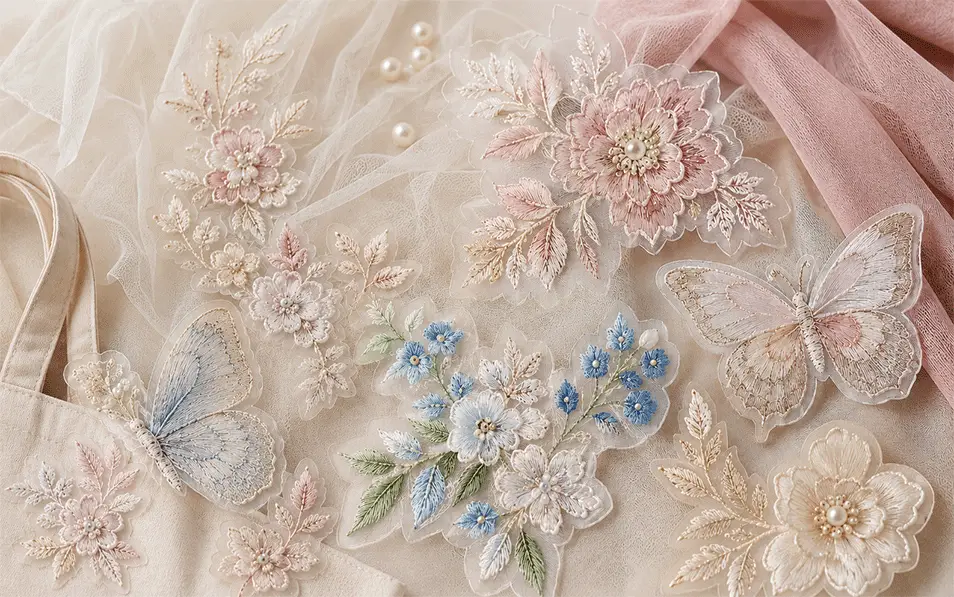
An organza applique patch is an embroidered or decorated motif made on organza, a thin, crisp, sheer fabric. After the embroidery is finished, the organza is trimmed close to the design so the motif can be attached to another surface.
That surface might be a wedding veil, a tulle skirt, a mesh top, a prom dress, a stage costume, a denim jacket, a tote bag, or a fashion hoodie. The organza base gives the embroidery enough support during production, while the transparent look helps the applique blend into the garment.
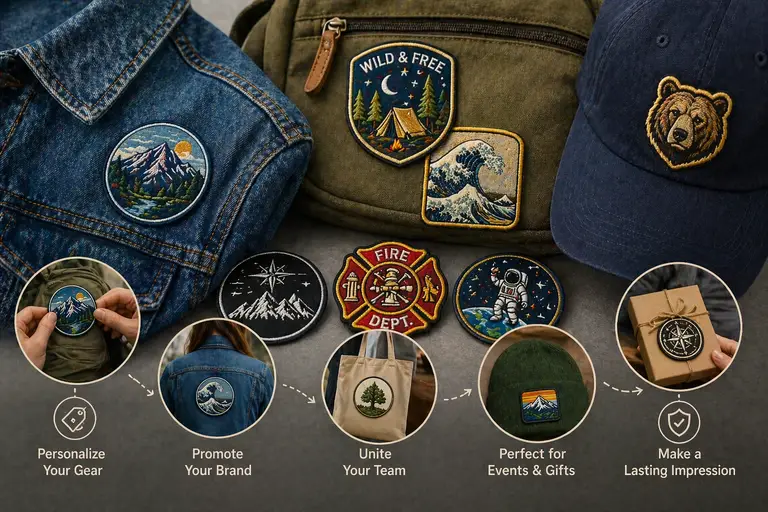
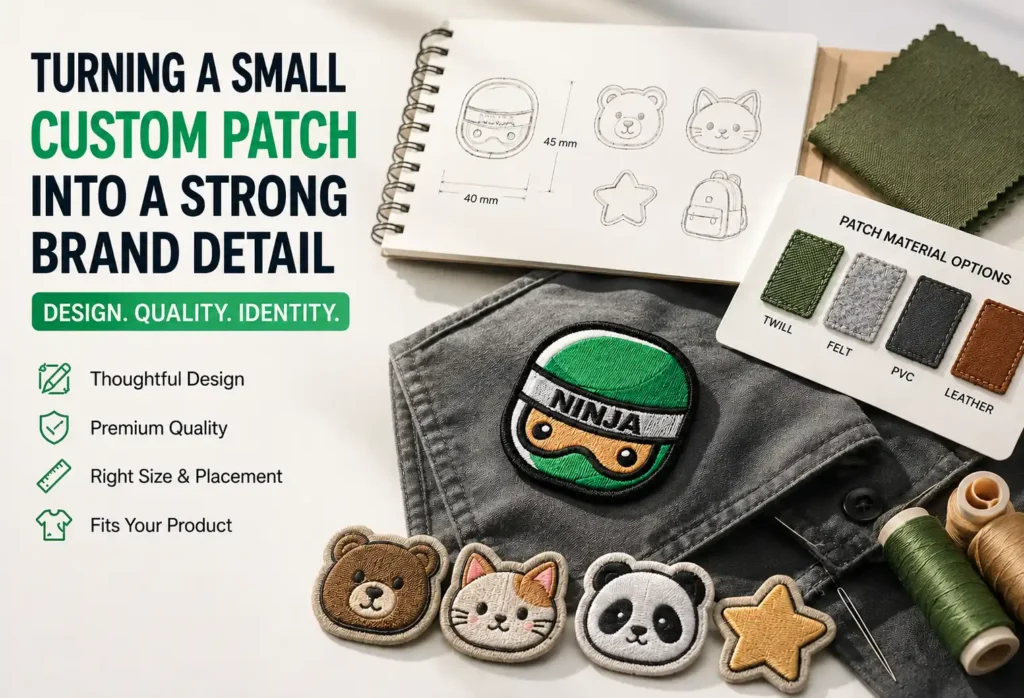
This is different from a regular embroidered patch on twill or felt. A standard patch usually wants to look solid. An organza patch often wants the opposite. It should feel light, delicate, and integrated into the garment.
Why people choose organza instead of a normal patch base
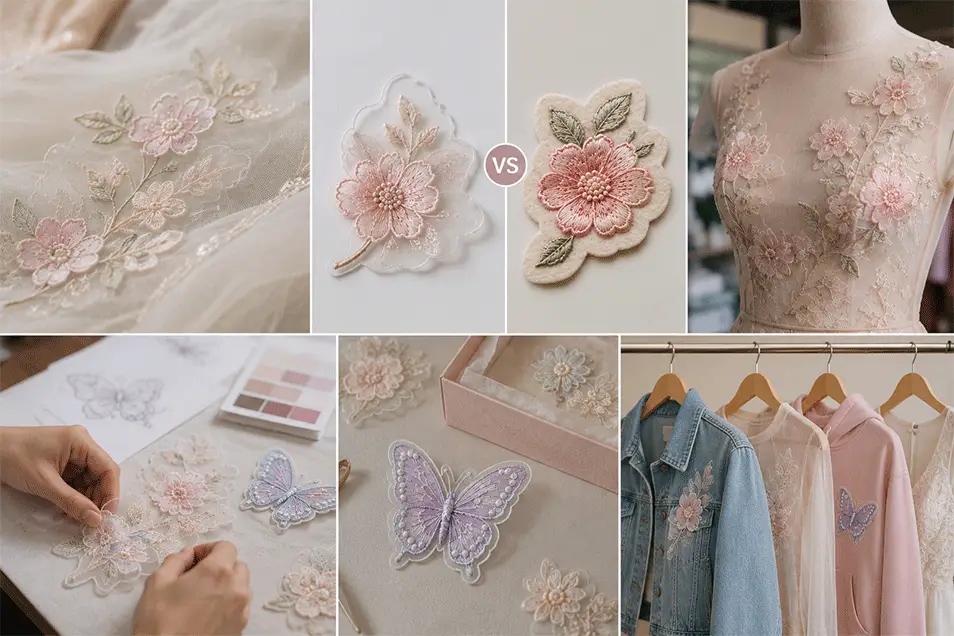
The biggest reason is visual softness. Twill, felt, and canvas make strong patches, but they can look too heavy on sheer, feminine, bridal, costume, or fashion-led pieces. Organza lets the embroidery appear as if it is sitting directly on the garment without a thick patch background.
It also gives makers and brands more flexibility. Instead of embroidering directly onto a finished garment, the motif can be produced separately, checked, trimmed, and attached later. That matters when the final garment fabric is expensive, delicate, stretchy, or hard to hoop.
For small fashion labels, this can be especially useful. A floral applique, logo motif, butterfly, lace-style element, or decorative sleeve detail can be developed as a separate custom patch, then applied across several garments in a capsule collection.
The design questions people care about most
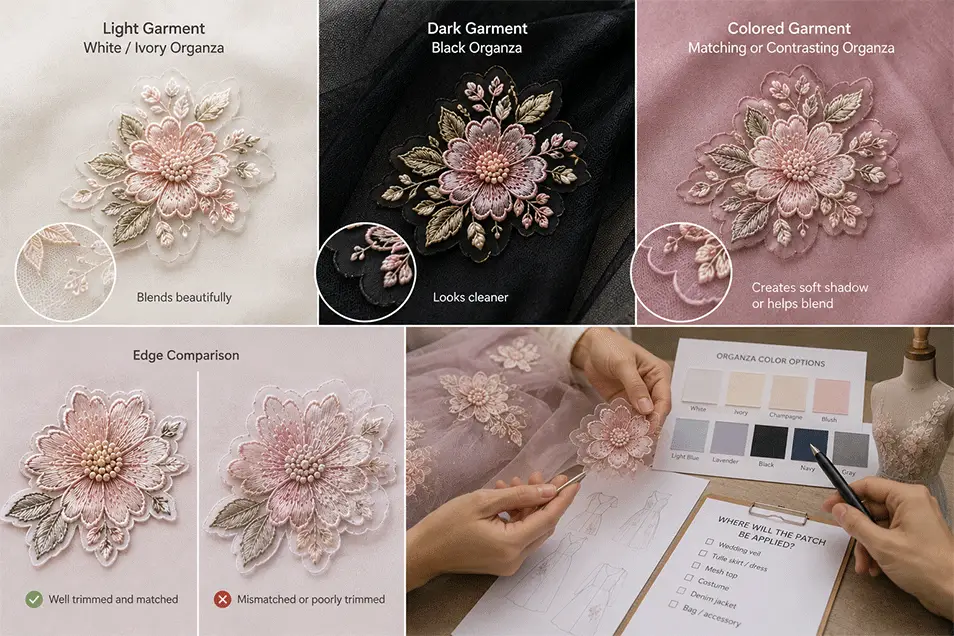
Will the transparent edge disappear
Not completely. Organza is sheer, not invisible. The edge can blend beautifully when the organza color, thread color, and garment fabric are planned together, but a badly trimmed or mismatched edge can still show.
For light garments, white or ivory organza may blend well. For black mesh, black organza usually looks cleaner. For colored garments, the best choice depends on whether you want the base to disappear or create a soft shadow around the design.
A good custom patch supplier should ask where the patch will be applied before confirming the organza color. If the supplier treats organza like any other backing fabric, the final result may look less refined than expected.
Is organza better than mesh or tulle
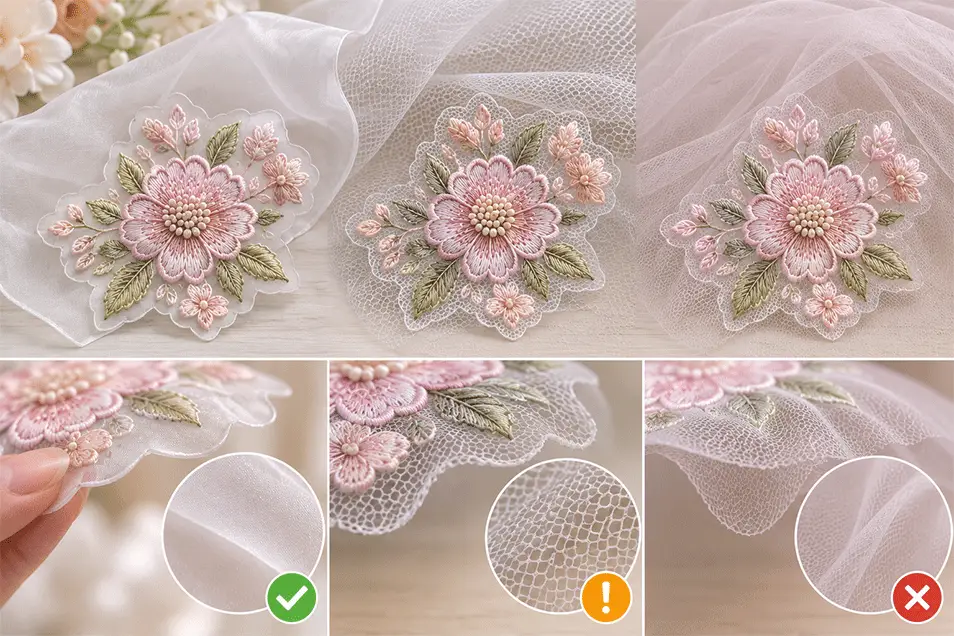
Organza is often better when the embroidery needs a crisp base and a clean trimmed edge. It has more structure than soft tulle, so it can support stitching more predictably.
Mesh can work too, especially for sporty or stretch-adjacent looks, but stretch mesh is risky for embroidery. If the base stretches and the embroidery does not, the design can distort, ripple, or pull when worn.
For custom orders, the safer question is not “which fabric is best?” It is “what fabric matches the final garment and the design density?” A delicate flower may work well on organza. A large dense logo may need a stronger base or a modified embroidery plan.
Do organza patches need stabilizer
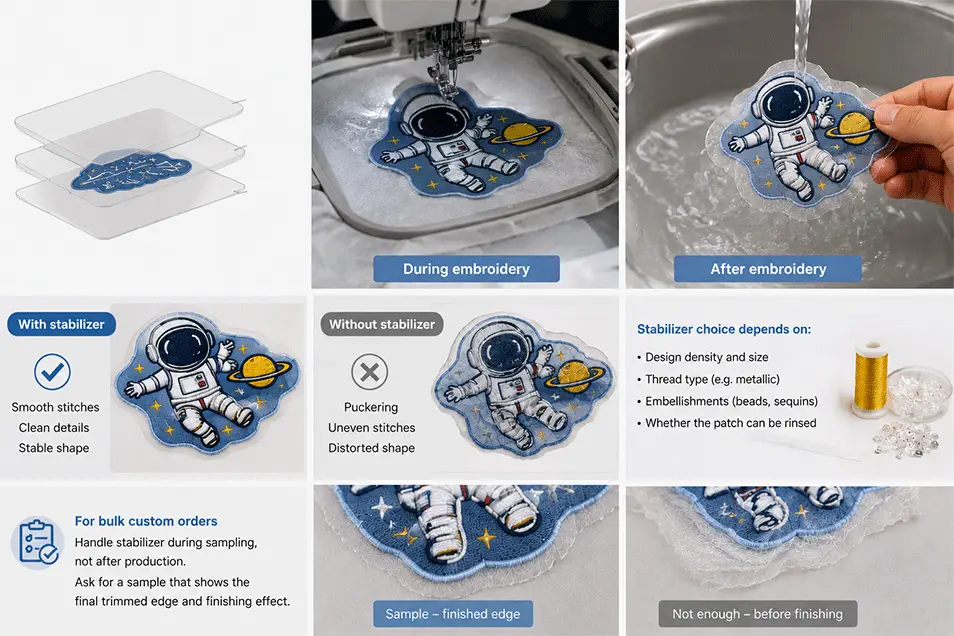
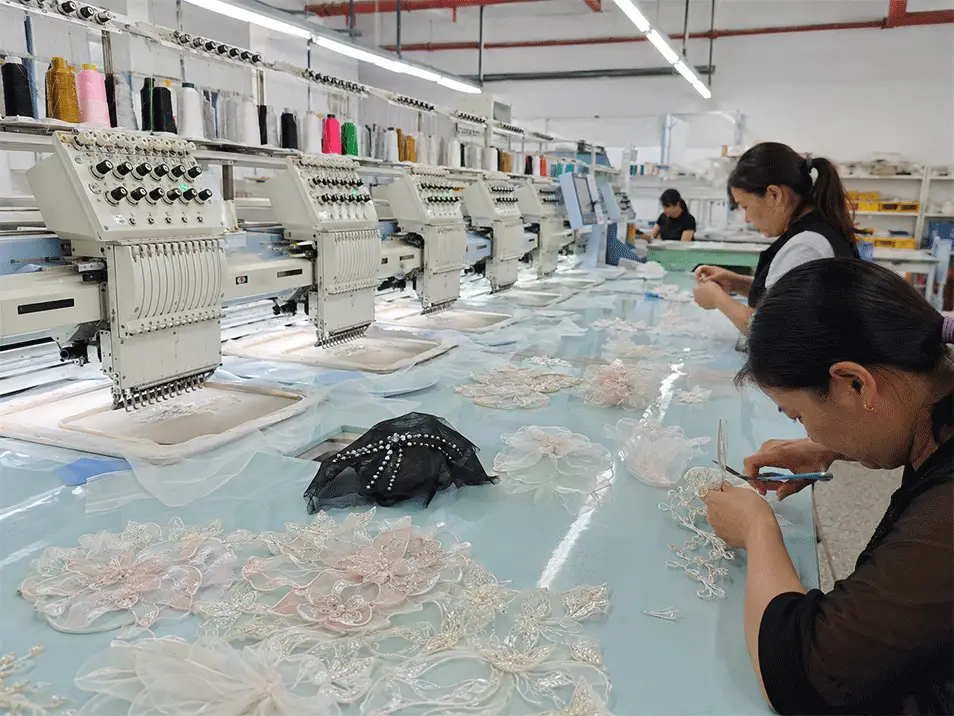
Usually, yes during embroidery. Organza is thin and can shift, pucker, or distort without support. Water-soluble stabilizer is commonly discussed because it can support the stitching and then be removed, leaving a cleaner sheer effect.
The choice of stabilizer depends on the thread density, motif size, embellishment, and whether the patch can safely be rinsed. Metallic thread, beads, sequins, and delicate specialty materials can change the finishing process.
For bulk custom organza applique patches, the stabilizer decision should be handled during sampling. Do not leave it as a production afterthought. Ask for a sample that shows the final trimmed edge, not only the embroidery before finishing.
Can organza applique patches go on tulle, veils, and mesh
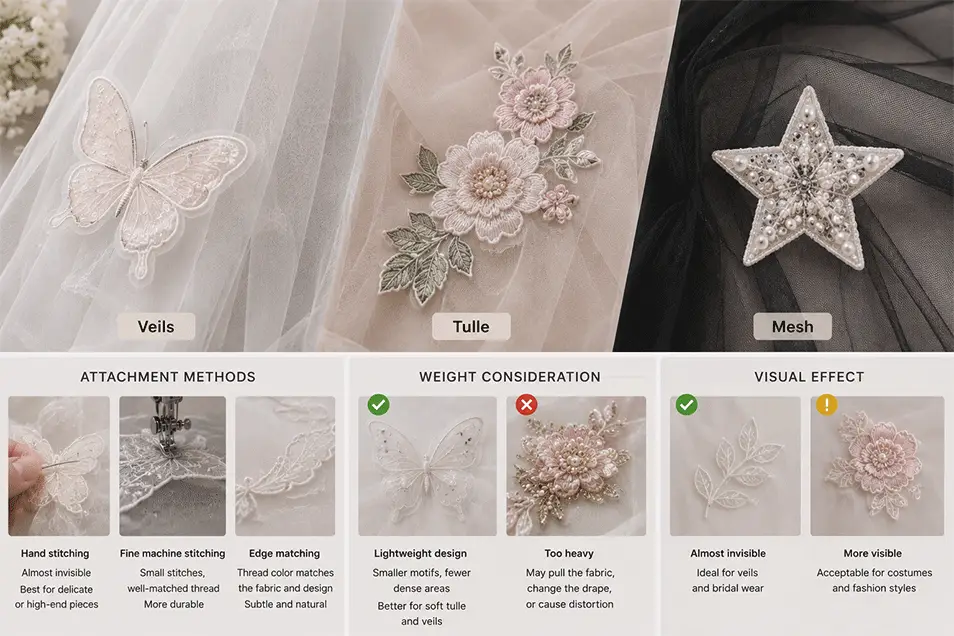
Yes, but the attachment method matters. On sheer or open fabrics, heavy stitching can look obvious. Hand stitching, fine machine stitching, or carefully matched thread may be used depending on the garment and production volume.
For veils and tulle, the attachment should feel almost invisible from normal viewing distance. For costumes and fashion garments, a slightly visible edge may be acceptable if it matches the design language.
The bigger risk is weight. A dense beaded applique may pull on soft tulle or make a veil hang differently. If the base fabric is very light, the patch should be designed with fewer dense filled areas, smaller motifs, or strategic placement.
Will the organza applique patch fray after trimming
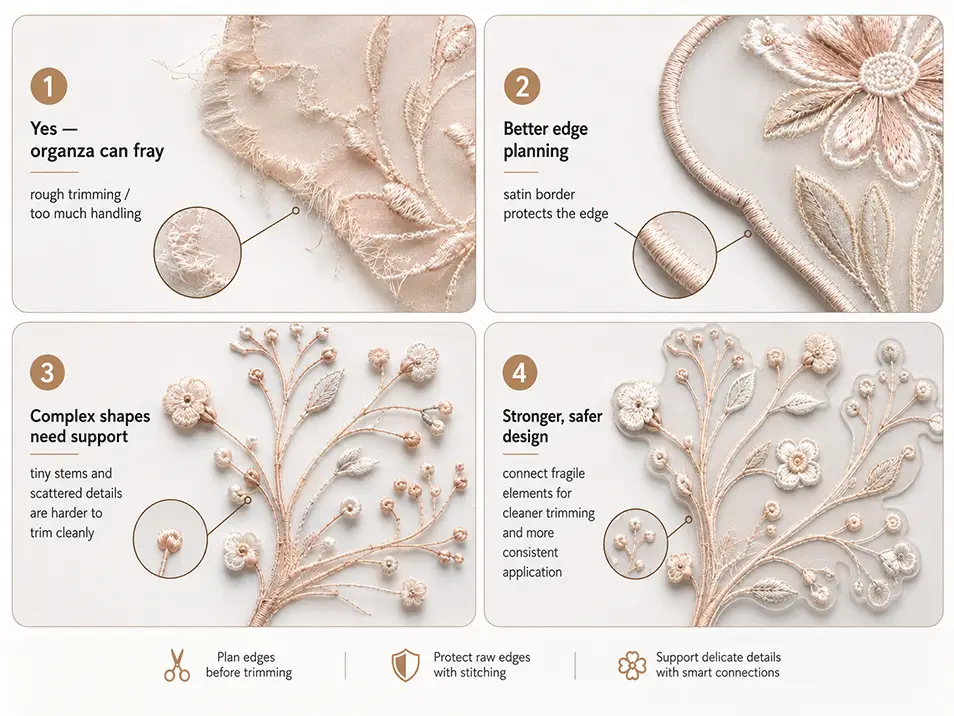
Organza can fray, especially if it is cut roughly or handled too much after trimming. That is why edge planning matters.
Some designs hide the trimmed organza edge inside the embroidered border. Others use a satin stitch border, lace-style outline, heat cutting where suitable, or careful hand finishing. Floral and organic shapes can look beautiful, but they may be harder to trim cleanly than simple shapes.
If the design has tiny branches, thin stems, scattered dots, or floating details, the supplier may need to connect elements with thread, organza, or a subtle outline. Otherwise, the patch may be fragile or difficult to apply consistently.
Best uses for custom organza applique patches
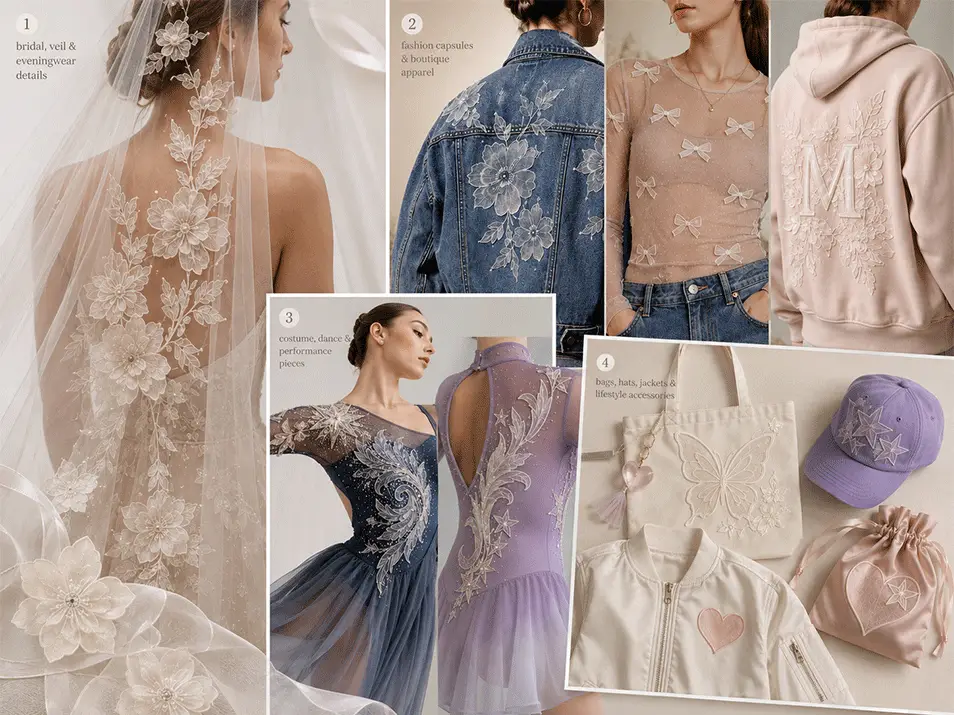
Bridal, veil, and eveningwear details
Organza applique patches are a natural fit for bridal veils, detachable sleeves, bodices, overskirts, flower details, and evening gowns. They can add embroidery without making the garment look like it has a heavy badge attached.
For this use, the most important decisions are color match, thread sheen, density, and edge softness. A white floral patch that looks lovely on a table may look too stark on ivory tulle. Sampling against the real fabric is worth it.
Fashion capsules and boutique apparel
Small labels can use organza patches to add a recognizable detail across multiple pieces: sheer flowers on denim, tiny bows on mesh tops, logo-floral hybrids on hoodies, or lace-like motifs on jackets.
This is where organza applique becomes more than a craft technique. It becomes a repeatable design part. A custom patch factory can help turn one motif into consistent pieces across sizes, colors, and garment styles.
Costume, dance, and performance pieces
Stage garments often need decoration that reads well from a distance but does not overload the base fabric. Organza applique patches can work for shoulder details, bodice accents, sleeve motifs, headpieces, and themed costumes.
The key is balancing visibility and durability. A tiny pale motif may disappear under stage lighting, while a heavily beaded patch may pull on stretch fabric. Good sampling should test both appearance and movement.
Bags, hats, jackets, and lifestyle accessories
Organza patches are not limited to delicate garments. Beaded or embroidered organza motifs can also work on summer jackets, caps, tote bags, satin pouches, and limited-run merch.
On sturdier products, the patch can be more decorative and less invisible. The organza edge may become part of the look, especially with layered flowers, butterflies, stars, hearts, or soft romantic graphics.
Design choices that make organza patches look better
Keep the embroidery density under control
Dense fill stitching can make organza pucker or become too stiff. For a light fashion detail, open stitching, linework, satin outlines, partial fills, and small accent fills often look more elegant.
If the design is a logo, simplify it before production. Tiny lettering, thin gradients, and very small brand marks may not suit organza unless the patch is large enough.
Use the border as part of the design
A border is not only decoration. It can protect the edge, hide trimming, and make attachment easier. On organza applique patches, the border can be a satin stitch, lace-style outline, vine edge, petal edge, or tone-on-tone thread.
For natural floral shapes, a hard badge-style border may look wrong. A softer stitched edge usually feels more refined.
Match the base to the final garment
Do not choose organza color in isolation. Test it against the actual garment fabric whenever possible. White, ivory, black, nude, blush, silver gray, and transparent-looking pale tones can behave very differently depending on the base fabric.
This matters for cafés, clubs, fashion brands, and event merch too. If the patch will be applied to a black hoodie and a cream tote, the same organza base may not work equally well on both.
Think about attachment before production
A patch that looks perfect loose may be difficult to sew onto the final item. Very thin points, separate tiny elements, and oversized motifs can create extra labor during application.
For bulk orders, ask the supplier how the patch should be attached and whether the border allows efficient sewing. If your garment factory will apply the patches, give them a sample before committing to the full run.
When organza is not the best choice
Organza applique patches are not ideal for every project. If the patch needs to be rugged, washable every week, used on workwear, attached with Velcro, or made as a bold uniform badge, a standard embroidered patch, woven patch, PVC patch, or chenille patch may be a better fit.
Organza is best when the goal is delicate decoration, lightness, and a softer fashion effect. It is less suitable when the main goal is toughness, heavy abrasion resistance, or sharp tiny logo detail.
For example, a restaurant uniform logo usually makes more sense as a woven or embroidered patch. A sheer floral sleeve detail for a limited apparel drop may be a strong organza applique project.
What to send your supplier for a custom order
If you want custom organza applique patches, do not send only the artwork and quantity. The supplier needs context.
| Required Information | What to Provide |
|---|---|
| Design | Artwork or a clear reference image |
| Size | Intended width and height |
| Application | Where and how the patch will be used |
| Base Material | The fabric or surface receiving the patch |
| Colors | Preferred organza and thread colors |
| Quantity | Sample and bulk order quantities |
| Attachment | Sewing or another preferred attachment method |
| Special Details | Beads, sequins, metallic thread, or 3D flowers |
| Reference Material | A product photo, material photo, or physical swatch if available |
Based on this information, ChengYi Custom Patch can evaluate the appropriate organza base, adjust the embroidery density and border structure, select a suitable stabilizer, and plan the trimming and attachment method. For designs with beads, sequins, metallic thread, or 3D details, the team can also consider their effect on weight, flexibility, and finishing during sampling. Testing a finished sample on the intended material helps confirm that the patch blends, holds its shape, and can be applied cleanly before bulk production.
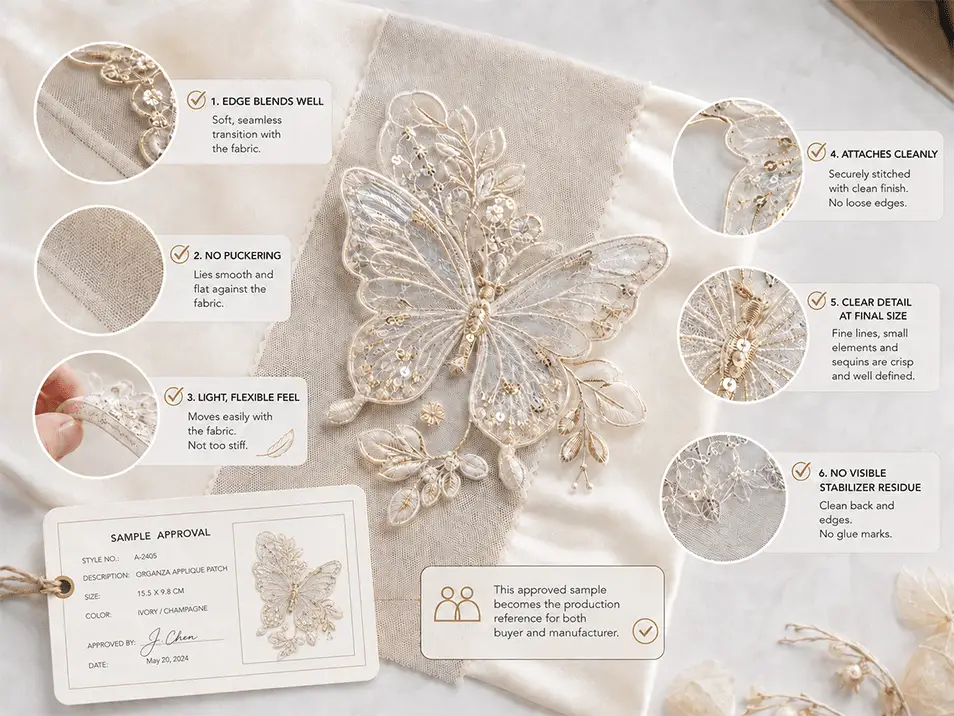
A useful sample should answer practical questions:
① Does the organza edge blend well enough
② Does the embroidery pucker
③ Is the patch too stiff or too heavy
④ Can it be attached cleanly
⑤ Does the design still read at the intended size
⑥ Does the backing or stabilizer leave any visible residue
For repeat production, the sample should become the approval reference. That protects both the buyer and the manufacturer because organza details depend on subtle finishing choices.
A clearer way to think about organza applique patches
Organza applique patches are best for projects where the decoration needs to feel part of the garment, not sitting loudly on top of it. They are delicate, flexible in style, and especially useful when direct embroidery would risk damaging the final fabric.
The strongest results come from treating the patch as a finished apparel component, not just an embroidered motif. That means designing the edge, base color, stitch density, stabilizer, and attachment method together.
If your project involves sheer fabric, bridal details, floral fashion, costume decoration, or small-batch apparel with a soft embroidered look, organza applique patches are worth testing. Just do not skip the sample. With this type of patch, the small details are the whole point.