
How to Choose Custom Iron On Patches That Stay Secure on Any Fabric
An iron-on patch usually does not fail because someone forgot to hold the iron long enough. More often, the patch, adhesive, fabric, and application method were never a good match in the first place.
That distinction matters when you are ordering custom iron on patches for a jacket drop, a school event, cafe uniforms, a trucker-hat station, or a small retail collection. A patch can look excellent in the sample bag and still lift at the corners once it meets a textured garment, a curved panel, a water-resistant coating, or repeated washing.
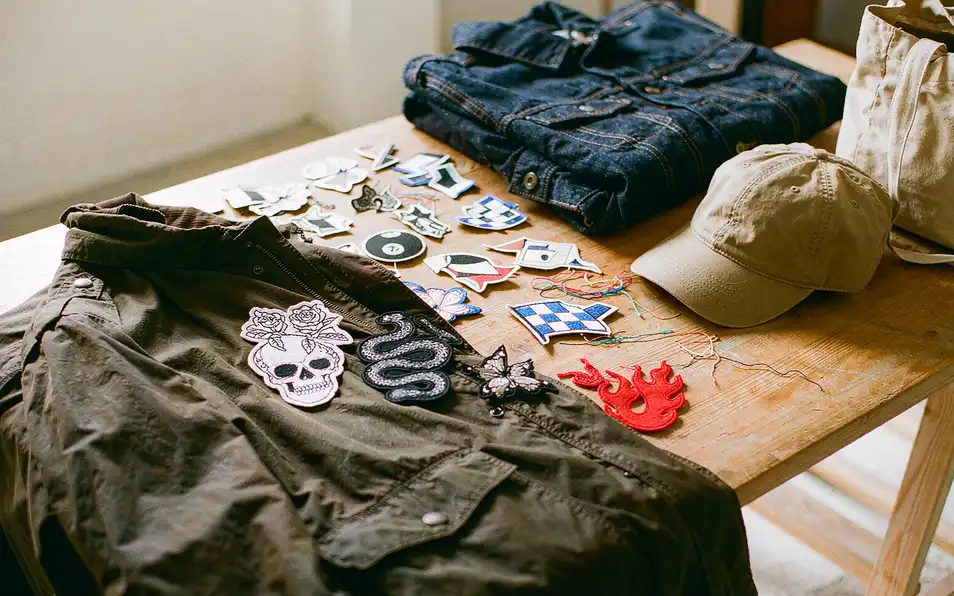
Why Custom Iron On Patches Peel
Iron-on backing is a heat-activated adhesive film applied to the reverse of a patch. Heat softens the adhesive; pressure pushes it into the fabric surface; cooling lets the bond set. All three parts matter.
Peeling usually begins when one part of that sequence is weak. The patch may be pressed at the wrong setting, the pressure may be uneven, the garment may contain a finish that resists bonding, or the patch may be too stiff for a flexible area. Washing and abrasion then expose the weak point, often at a corner or narrow tip.
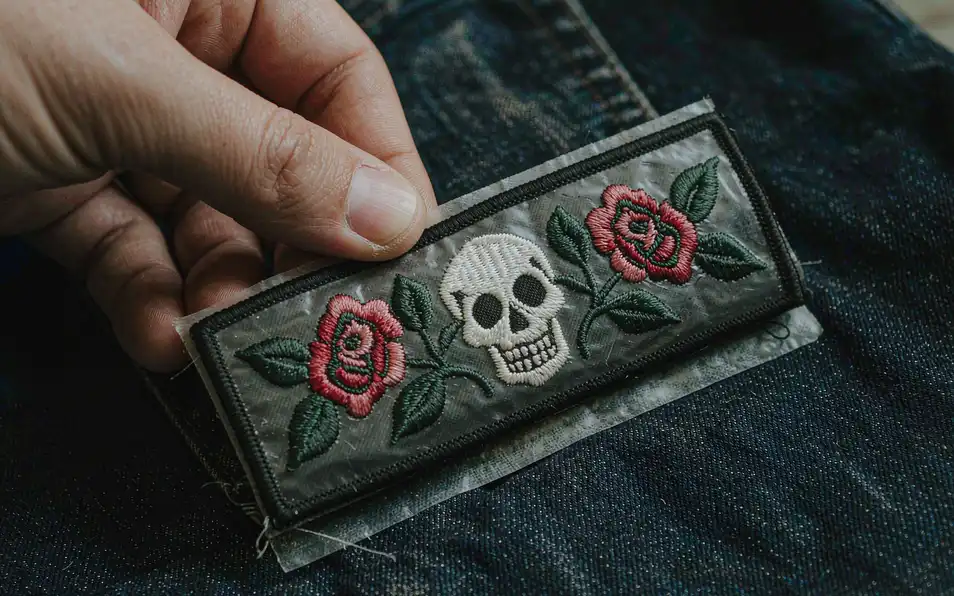
The Fabric Surface Gives the First Clue
Smooth, stable, heat-tolerant fabrics give adhesive a better chance to make broad contact.
Raised, fuzzy, ribbed, stretchy, coated, or highly textured surfaces create gaps under the backing. Corduroy is a good example: the adhesive touches the ridges more readily than the channels. A thick patch on a stretchy hoodie can also fight the garment every time it flexes.
Heat Tolerance Sets a Hard Limit
Some synthetics, waterproof shells, performance fabrics, and coated bags cannot safely accept the heat needed to activate a particular adhesive. Turning the temperature higher is not a solution if the garment can shine, distort, melt, or lose its finish.
Always follow the garment care label and the backing supplier’s application instructions. When either one rules out the required heat, choose sew-on or hook-and-loop attachment instead.
Pressure Is Often the Missing Variable
A household iron provides heat, but pressure varies with the person, ironing board, patch shape, and garment construction. Steam holes can also create uneven contact.
This does not mean a household iron never works. It means the application method should match the scale and the risk. One denim tote is different from 300 staff shirts due before an opening day.
Patch Shape and Weight Affect the Bond
Large back patches, heavy chenille letters, sharp points, and narrow extensions put more stress on the adhesive than a compact round badge. A supplier should consider patch size, stiffness, border, and intended garment before recommending heat-seal backing.
The Best Fabrics for Iron On Patches
Custom iron on patches perform most predictably on flat areas of cotton, denim, cotton twill, and many canvas products, provided the care label permits ironing. These fabrics are common on jackets, jeans, tote bags, aprons, work shirts, and casual uniforms.
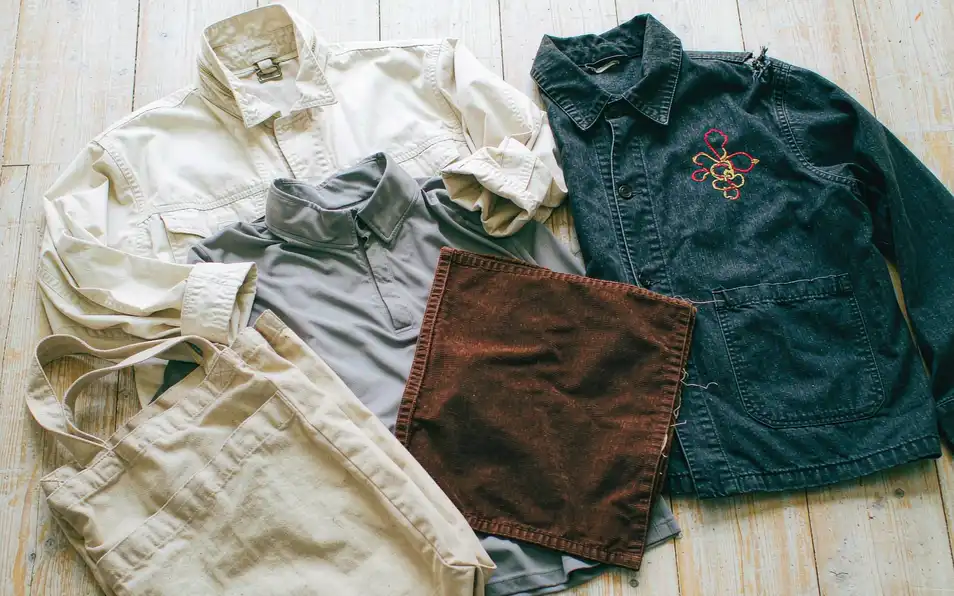
Cotton and Cotton Twill
Cotton shirts, aprons, and twill uniforms are good candidates when the surface is smooth and the garment can handle the specified heat.
Denim
Denim is one of the strongest use cases for embroidered or woven iron-on patches. It is stable, visually suits patch decoration, and is common in jackets, jeans, vests, and bags. Apply on a flat panel rather than across thick seams, rivets, or pocket edges.
Canvas
Canvas totes, tool bags, and casual accessories can work well, but surface treatments matter. Waxed canvas and water-repellent coatings may resist the adhesive or react badly to heat. Ask what finish is on the product before approving the backing.
Polyester and Blended Fabrics
Some polyester and poly-cotton items accept heat-applied patches; others discolor, scorch, or deform. There is no honest universal setting for every blend. Use the garment manufacturer’s heat limit, the adhesive specification, and a physical application test together.
Fabrics That Need More Caution
Nylon, waterproof shells, coated performance wear, leather, faux leather, stretch knits, fleece, velvet, corduroy, and delicate fabrics deserve caution. The problem may be heat sensitivity, texture, surface treatment, movement, or several of these at once.
For a valuable, technical, or difficult-to-replace garment, ask the garment supplier to approve the application method before testing.
Household Iron or Heat Press
For a personal project, a household iron can be enough when the patch is small, the fabric is flat, and the adhesive is designed for home application. For repeat commercial work, a heat press is usually the more controlled option.
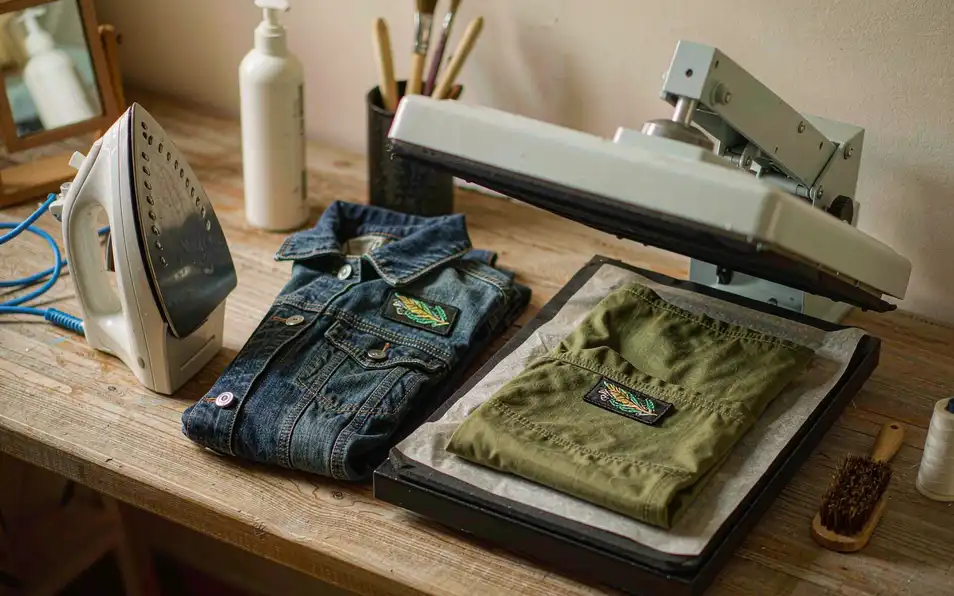
A Heat Press Improves Repeatability
A heat press applies the same time, pressure, and heat across the working area. That makes it easier to create a repeatable production step, train staff, and check results. It is especially useful for event merchandise, uniform programs, patch bars, and garment factories.
A Household Iron Is Better for Low-Volume Use
An iron is accessible and convenient, but the user must keep the base flat, avoid steam, protect the patch and fabric as directed, and apply firm, even pressure. Thick seams, curved surfaces, and small pointed shapes make consistency harder.
Do not publish or hand customers one generic temperature for every order. Good instructions should be tied to the approved patch and the tested garment.
How to Apply an Iron On Patch Without Guesswork
Start With a Compatibility Check
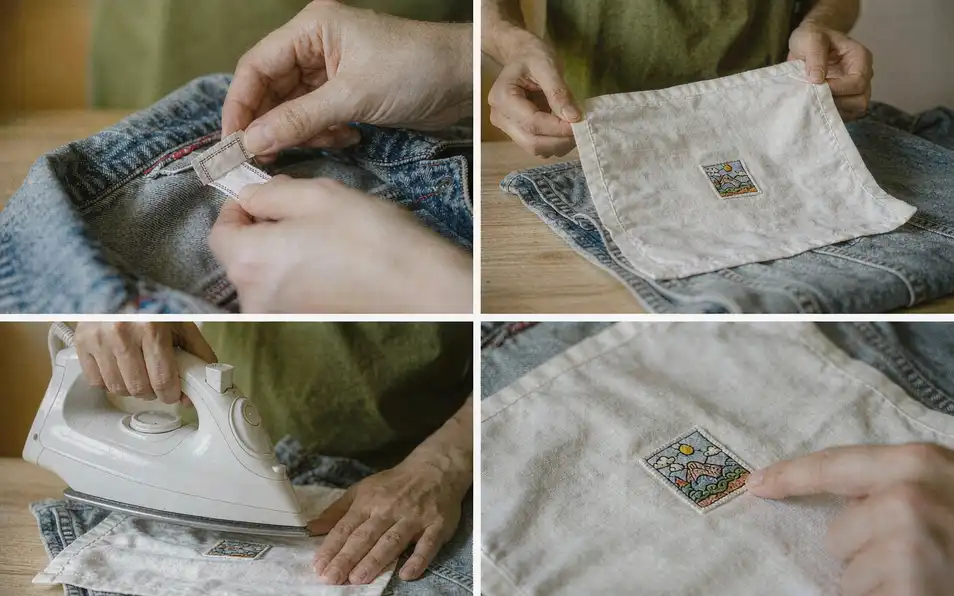
Read the garment care label. Confirm that the area is clean, dry, flat, and free of fabric softener residue or surface treatments that could block adhesion. If the item cannot be ironed, stop there.
Test the Actual Garment
For a retail run or uniform order, use a production garment, not a random scrap that merely looks similar. Press one sample in the intended location. Check the front and inside for shine, color change, distortion, adhesive bleed, and lifting.
Follow the Backing Instructions
Use the time, heat, protective layer, pressing direction, and cooling method supplied with the patch. Some applications benefit from heat from the reverse side; some garments make that impossible.
Let the Bond Cool Before Testing
Fresh adhesive may still be soft. Moving or peeling at the patch immediately can weaken the bond before it sets. Let the item cool as directed, then inspect every edge with gentle pressure.
Run a Wear and Wash Test Before Bulk Launch
For staff apparel, merchandise, or garments sold to customers, a visual check is not enough. Wear the sample, flex the decorated area, and wash it according to the care instructions. The goal is to discover a weak combination before the full batch is applied.
When Iron On Plus Sewing Is the Better Answer
Iron-on and sew-on are not opposing camps. They can work together.
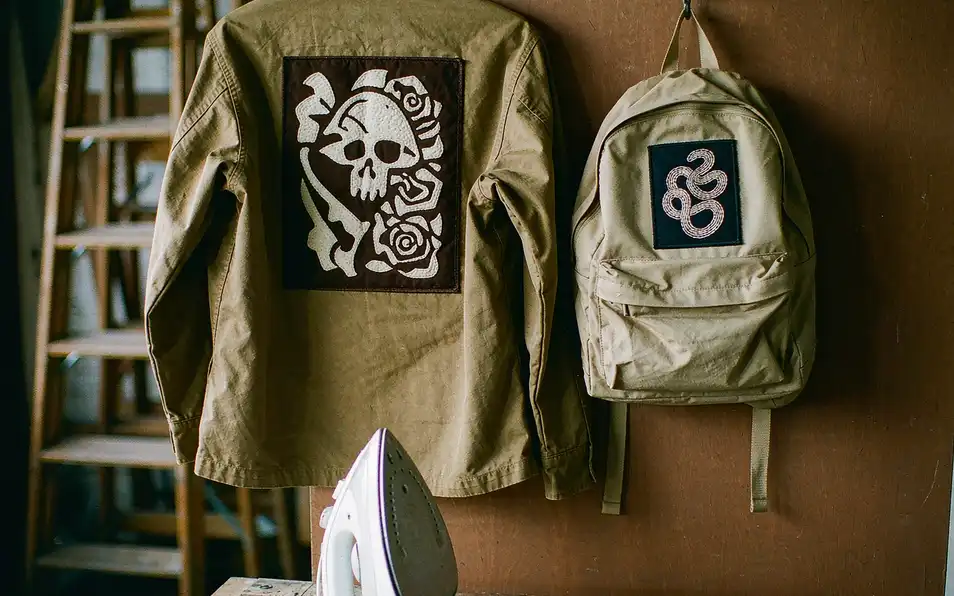
Heat-seal backing can position the patch quickly and keep it flat while a few stitches secure the perimeter. This hybrid method is sensible for uniforms, children’s bags, motorcycle or club jackets, workwear, and garments that will be washed often. It also protects pointed corners that are more likely to lift.
If the design must remain removable, use hook-and-loop instead.
Choosing the Right Patch Construction
The backing is only one part of the decision. The front construction influences thickness, flexibility, detail, and how easily the patch follows the garment.
Embroidered Iron On Patches
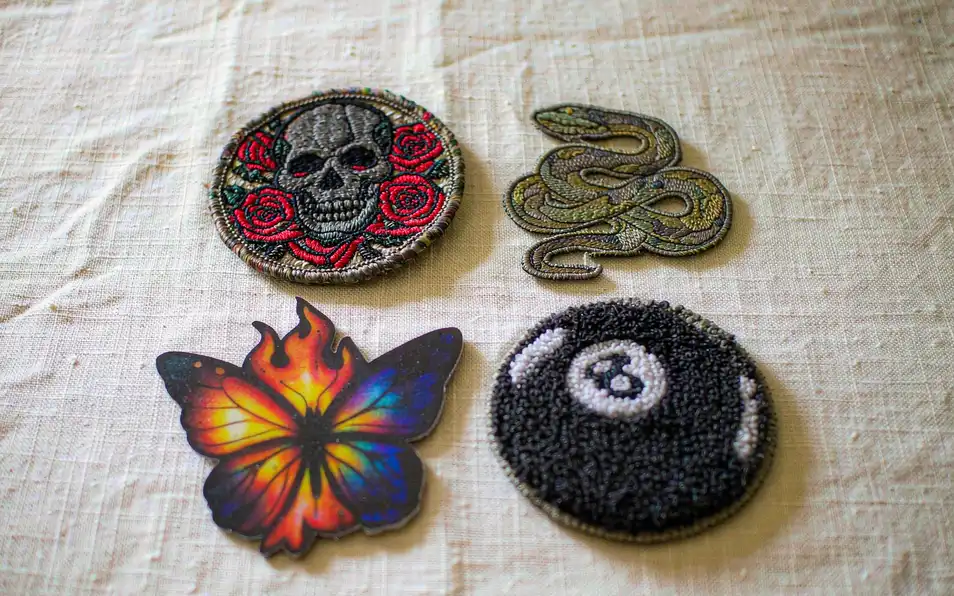
Embroidery gives logos, emblems, mascots, and bold lettering a classic raised texture. It works well on denim jackets, aprons, totes, and uniforms when the design does not rely on very small details. Dense embroidery can be relatively stiff.
Woven Iron On Patches
Woven patches are thinner and smoother, with better clarity for fine lines and small text. Their lower profile can be useful on lighter garments or designs that need detail without heavy texture.
Printed Iron On Patches
Printed patches suit gradients, illustrations, photo-like artwork, and complex color. Because the visual layer can carry more detail than thread, they are useful for event art, retail graphics, and designs with subtle shading.
Chenille and Heavy Specialty Patches
Chenille is popular for varsity letters, game-day apparel, and statement designs, but it is thicker and heavier than a typical woven patch. A curved hat crown, flexible sweatshirt, or frequently washed garment may need a professional press and stitched reinforcement.
Ordering Custom Iron On Patches for a Real Product
The strongest quote request explains where the patch is going. Send the supplier more than a logo and quantity.
Include:
- the garment or product type
- the fabric composition and any coating
- the exact placement area
- the patch dimensions and shape
- the expected order quantity
- whether application happens at home, in a shop, or in a factory
- how often the item will be washed or exposed to abrasion
- whether edge stitching is acceptable
- the delivery deadline and destination
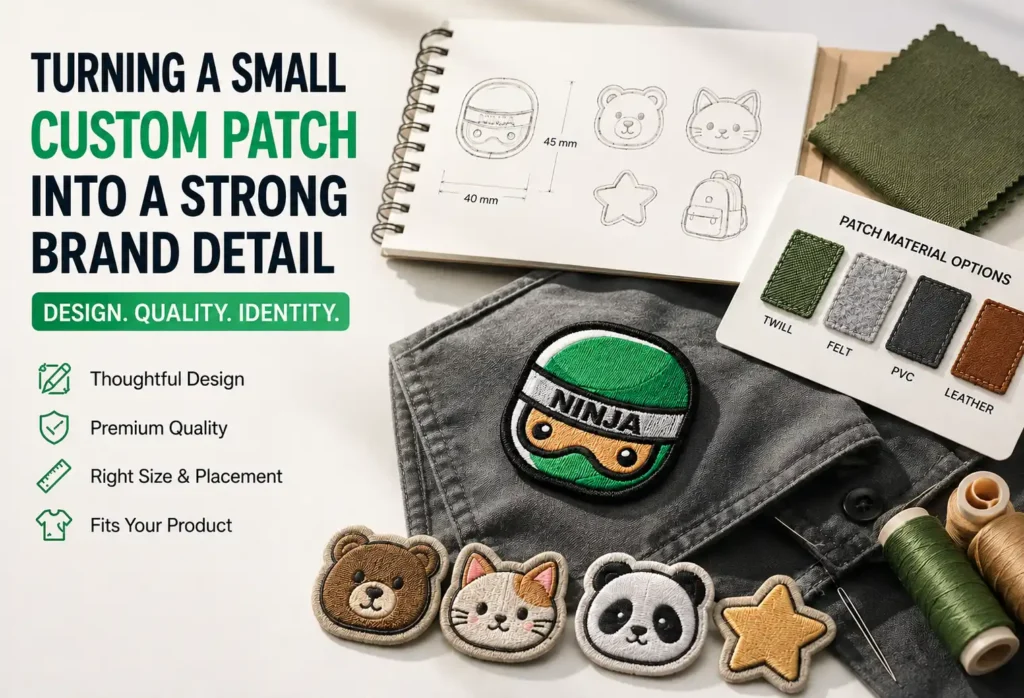
For bulk custom iron on patches, request a digital proof and, when the fabric or application is uncertain, a physical sample. A useful sample should confirm design clarity, border finish, patch flexibility, backing coverage, application instructions, and performance on the intended item.
ChengYi Custom Patch can review the artwork together with the garment, patch type, size, border, and backing choice. The goal is to approve a complete patch-and-garment combination that can be applied consistently.
Where Iron On Patches Make the Most Commercial Sense
Iron-on backing is most valuable when easy application is part of the product experience.
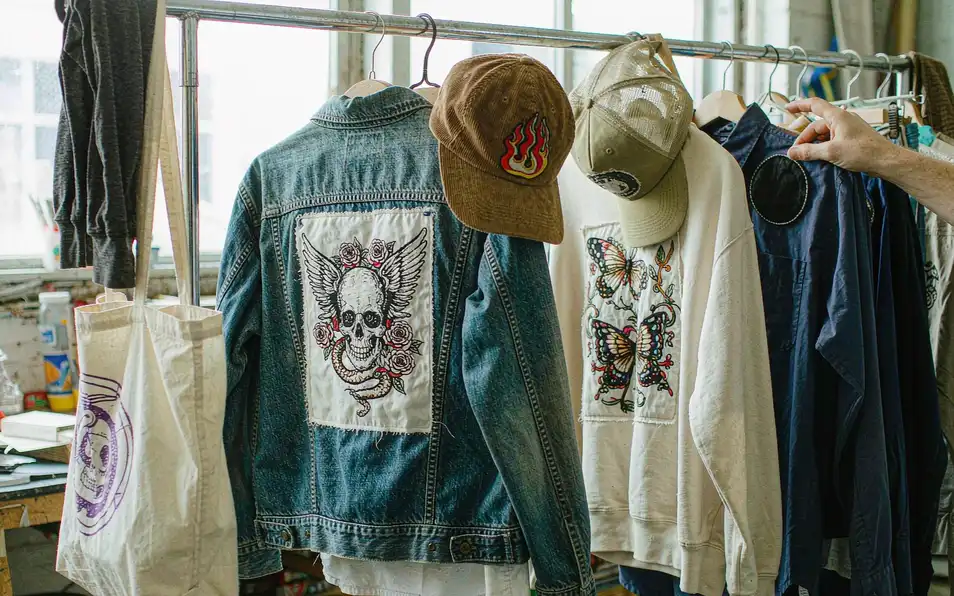
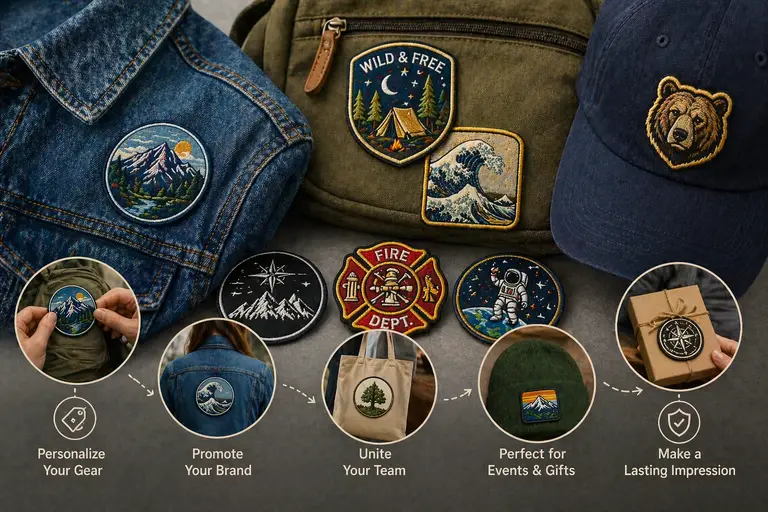
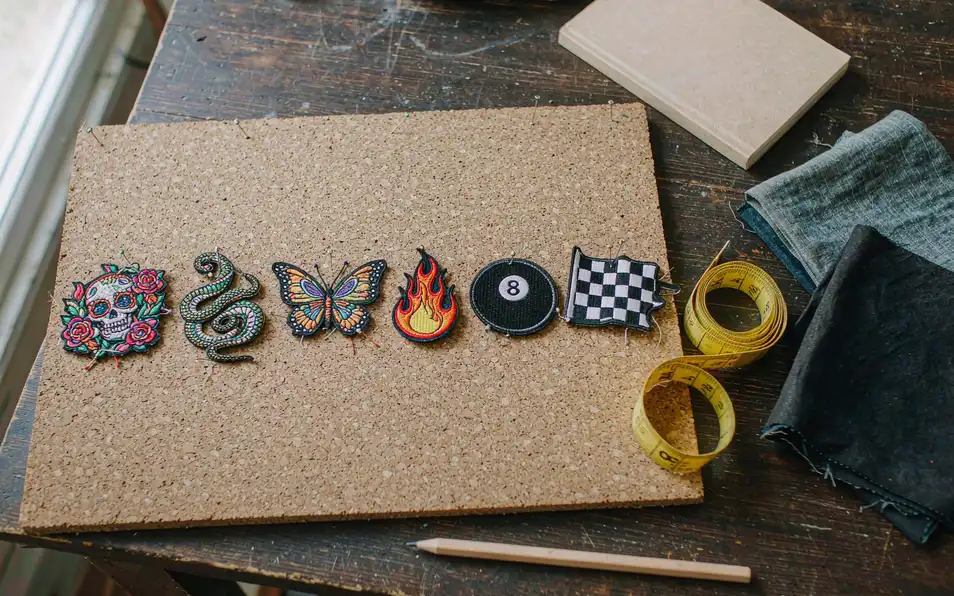
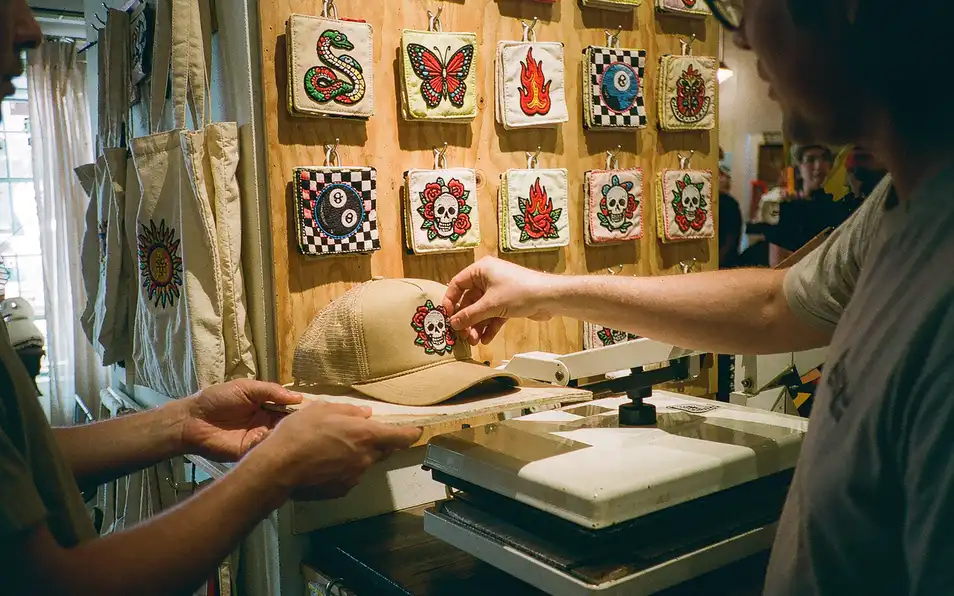
Patch bars and in-store customization let customers choose a design and watch it applied to a tote, cap panel, or sweatshirt. Event organizers can prepare crew badges, limited-edition graphics, or sponsor logos without sending every item through an embroidery machine. Retail stores can sell individual patches or themed sets for denim and bags. Schools, cafes, clubs, and teams can distribute patches that members apply at home, as long as the compatible fabrics and instructions are clear.
The emerging opportunity is not merely selling a loose patch. It is selling a tested use case: a trucker-hat patch sized for the front panel, a denim repair-and-decoration set, a game-day letter pack, or an event-merch patch designed for a specific blank garment.
That is also how suppliers reduce complaints. The more specific the application promise, the easier it is to test and support.
The Decision That Prevents Most Problems
Choose the garment first, then approve the patch construction and backing around it.
The best iron-on patch is not the one with the strongest-sounding glue claim. It is the one tested on the product your customer will actually wear, wash, carry, or sell.