
China Custom Patch Manufacturer Guide for Apparel Orders
Choosing a China custom patch manufacturer is not only about finding a low unit price. For apparel brands, garment factories, event organizers, hat suppliers, uniform buyers, club merch teams, and retail stores, the better question is this: can the factory turn your artwork into patches that look right, attach correctly, arrive on schedule, and stay consistent when the order moves from sample to bulk production
That is where many patch orders succeed or fail. A patch is small, but it carries a lot of visible responsibility. It may sit on the front of a cap, the sleeve of a work jacket, the chest of a school uniform, the back of a club vest, or the hang-carded accessory wall of a retail store. If the edge is uneven, the thread color feels off, the backing does not match the fabric, or the lettering loses clarity, the entire product looks less professional.
This guide explains how to evaluate a Chinese custom patch manufacturer from a practical sourcing point of view. It covers patch types, artwork review, sampling, MOQ, bulk production, quality control, packaging, and internal decision points before placing an order.
Why China remains a strong sourcing base for custom patches
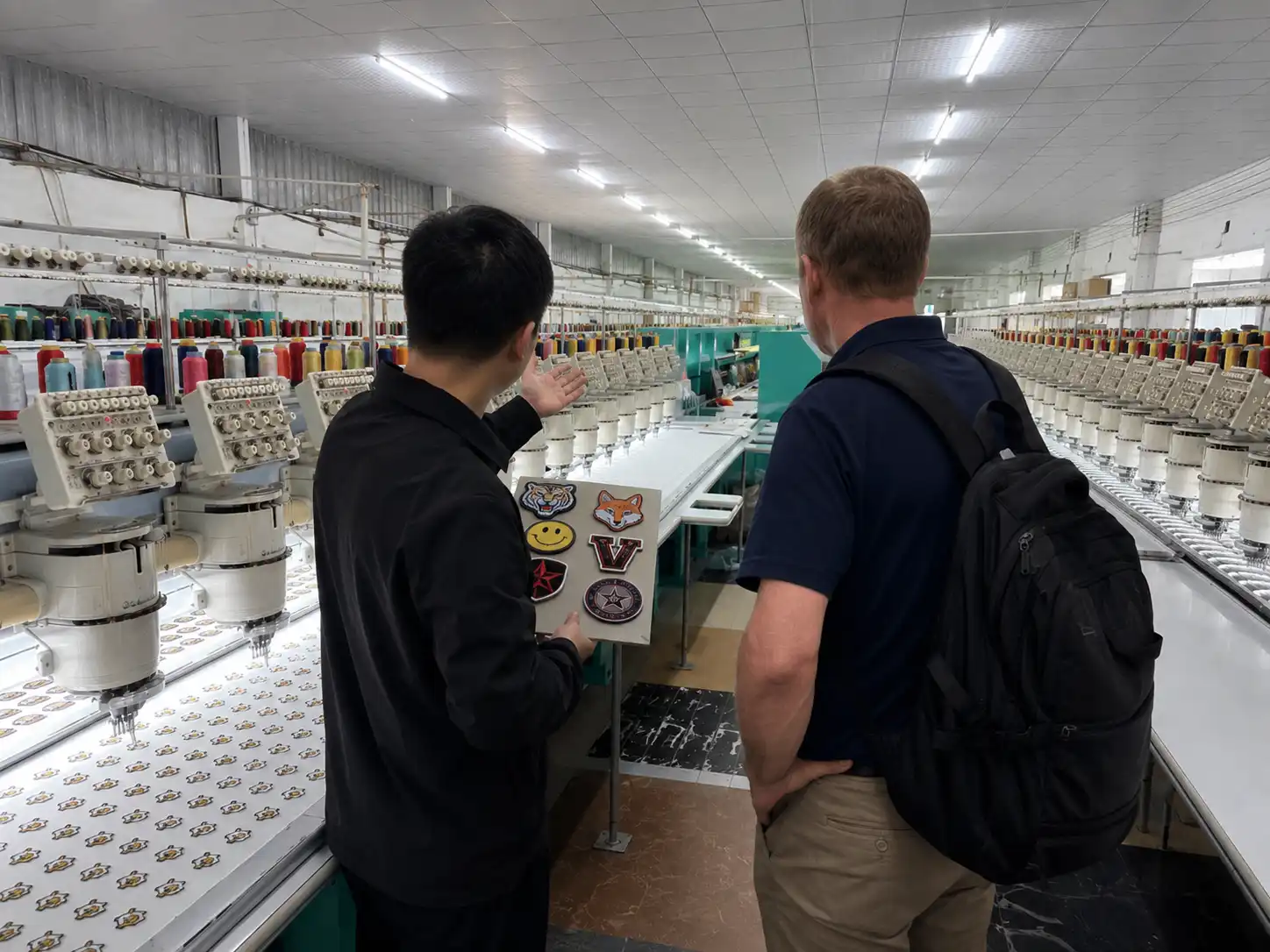
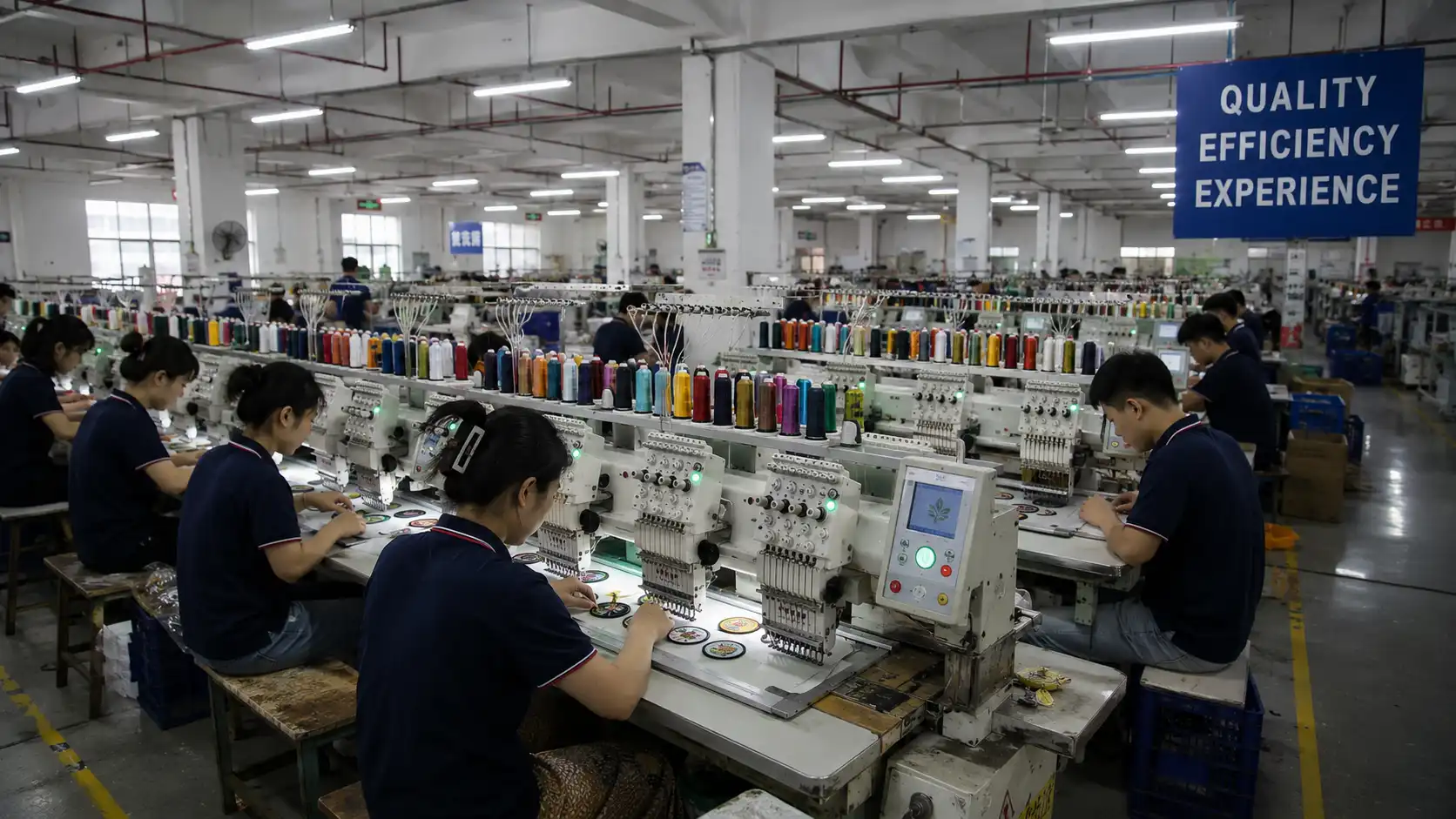
China has a mature supply chain for embroidery, woven labels, PVC molding, printing, trimming, heat-press backing, laser cutting, merrow borders, packaging, and export shipping. For custom patches, that matters because one order often touches several production steps. Even a simple embroidered logo patch may require artwork digitizing, thread selection, twill cutting, embroidery, edge finishing, backing application, inspection, packing, and freight coordination.
A capable China custom patch manufacturer can support different order sizes and many patch categories under one production system. This is useful for apparel projects where a single collection may need embroidered chest patches, woven neck-label-style patches, chenille varsity patches, PVC outdoor patches, or printed patches for detailed graphics. Instead of managing separate suppliers for each material, buyers often prefer one factory that can recommend the right construction for each design.
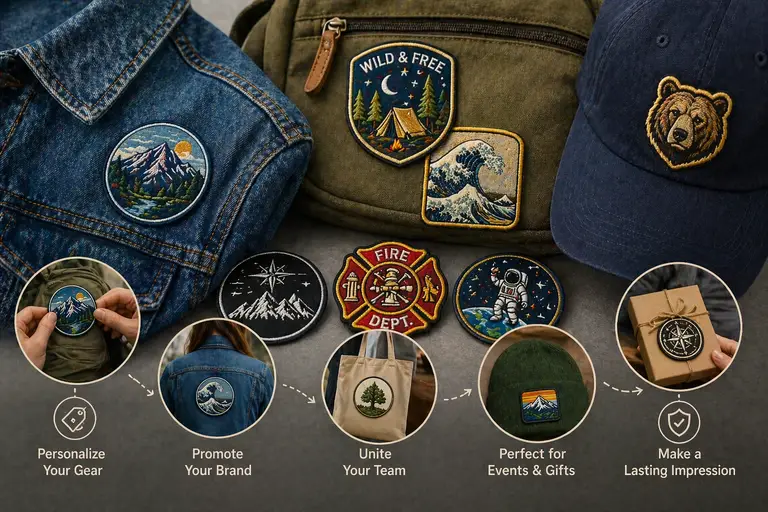
The advantage is not simply cost. It is production flexibility. A streetwear brand may test 50 to 100 pieces of a new cap patch before ordering 1,000 pieces for a drop. A garment factory may need repeated bulk orders with consistent colors and dimensions. A café chain may want branded patches for aprons, tote bags, staff caps, and seasonal merchandise. An event organizer may need a short lead time, individual packaging, and a design that photographs well at the venue. The right manufacturer understands these different pressures and helps convert the artwork into a patch format that fits the final use.
Start with the application, not the patch type
Many buyers start by looking for embroidered patches because this is the term they know best. However, embroidered patches may not be the right choice for every design or every use. Before asking for a quote, it is better to first think about where the patch will be placed, how it will be used, and what result you want the custom patch to achieve.
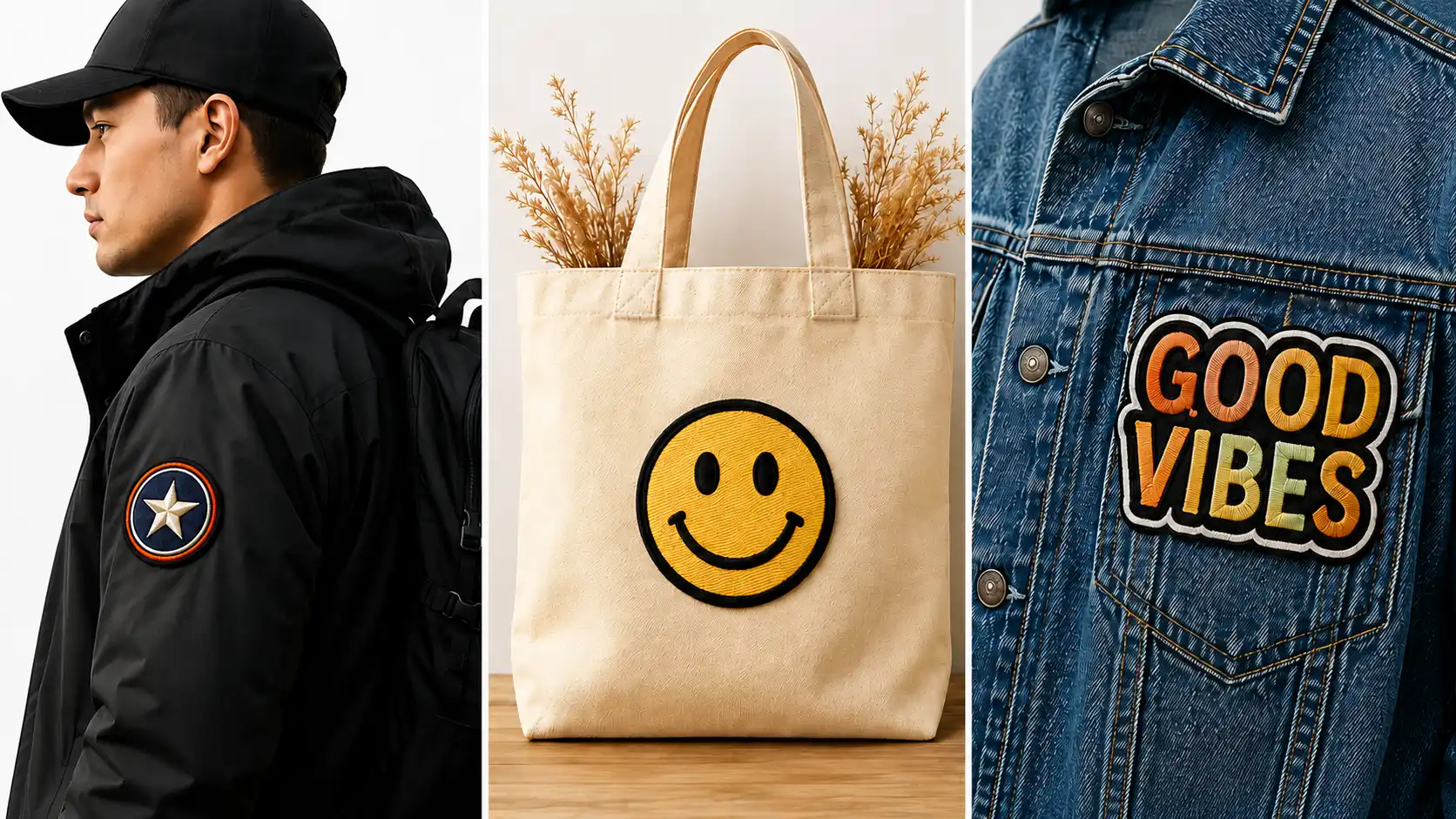
For caps and beanies, the patch often needs a compact size, clean border, and readable logo at a small scale. For jackets, denim, and workwear, durability and edge finishing matter more. For event merchandise, the patch may need bold color, a photogenic texture, and packaging that works for resale. For outdoor bags, tactical gear, or weather-exposed uniforms, waterproof and flexible materials may be more important than a traditional stitched texture.
If the design has small text or detailed line work, a woven patch may be cleaner than embroidery because woven threads can create finer detail with a flatter surface. If the design needs a plush college or varsity look, chenille can deliver texture and visual weight. If the design needs weather resistance, raised rubber detail, or a bold molded look, PVC may be the better route. If the design includes gradients, portraits, tiny illustrations, or photographic detail, printed patches may preserve more visual information.
This is why a good custom patch supplier should ask about the garment, placement, use environment, order quantity, and desired finish before quoting blindly. A cheap quote on the wrong patch type is not a saving. It is a production risk.
Choosing the Right Custom Patch Type for Your Design and Application
Embroidered patches for classic texture and brand familiarity
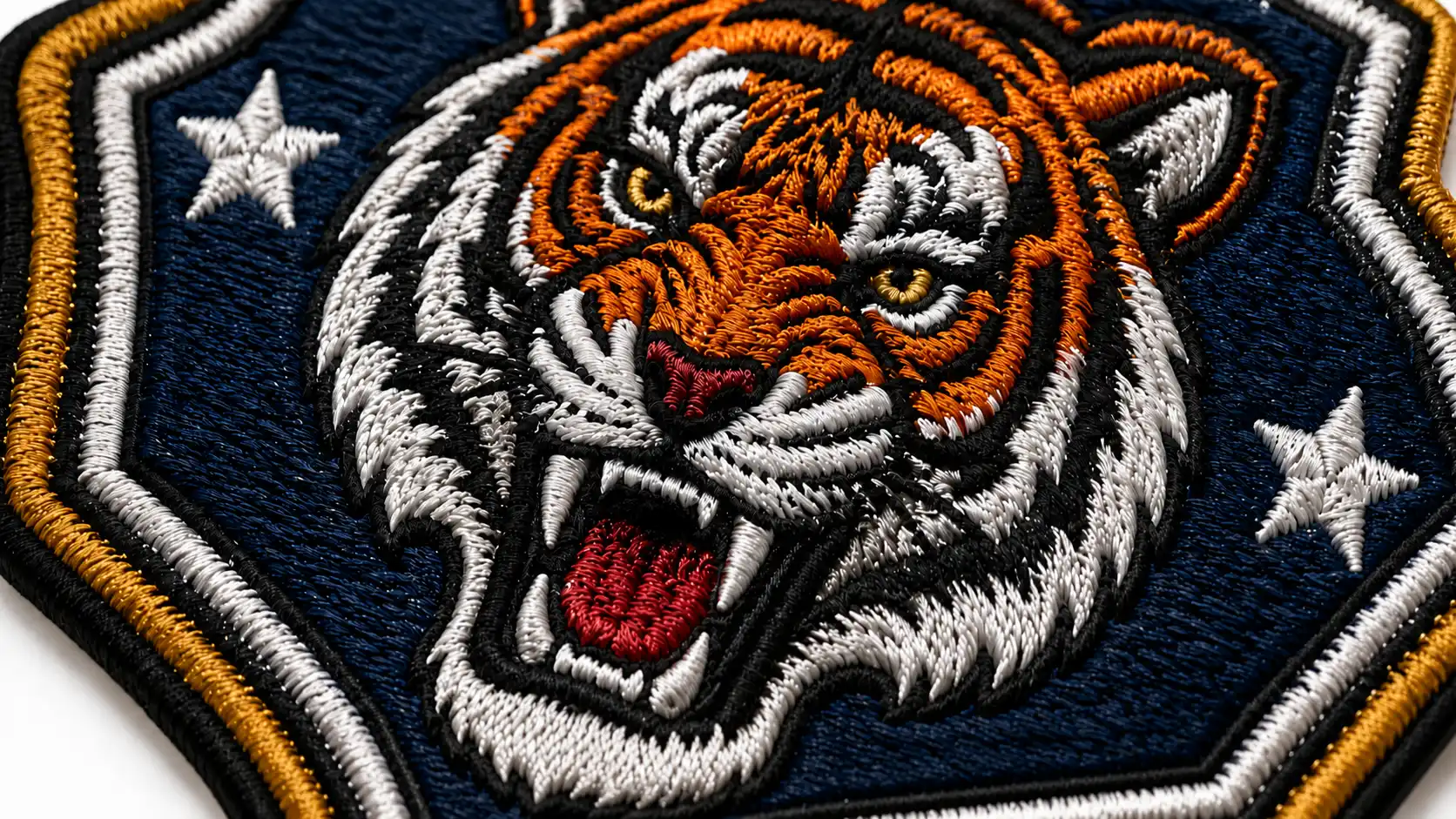
Embroidered patches are often the safest choice for logos with bold shapes, clear lettering, mascots, badges, uniforms, and team emblems. They create a raised stitched surface and a traditional patch feel. They work well on hats, jackets, polos, uniforms, backpacks, and event merchandise.
When reviewing artwork for embroidery, pay attention to line thickness, letter height, color count, and fill area. Small letters may close up if the stitch density is too heavy. Thin outlines may need to be simplified. Gradients usually need to be converted into solid thread colors. A reliable manufacturer should explain these adjustments before production, not after the bulk order is complete.
Chenille patches for varsity style and statement pieces
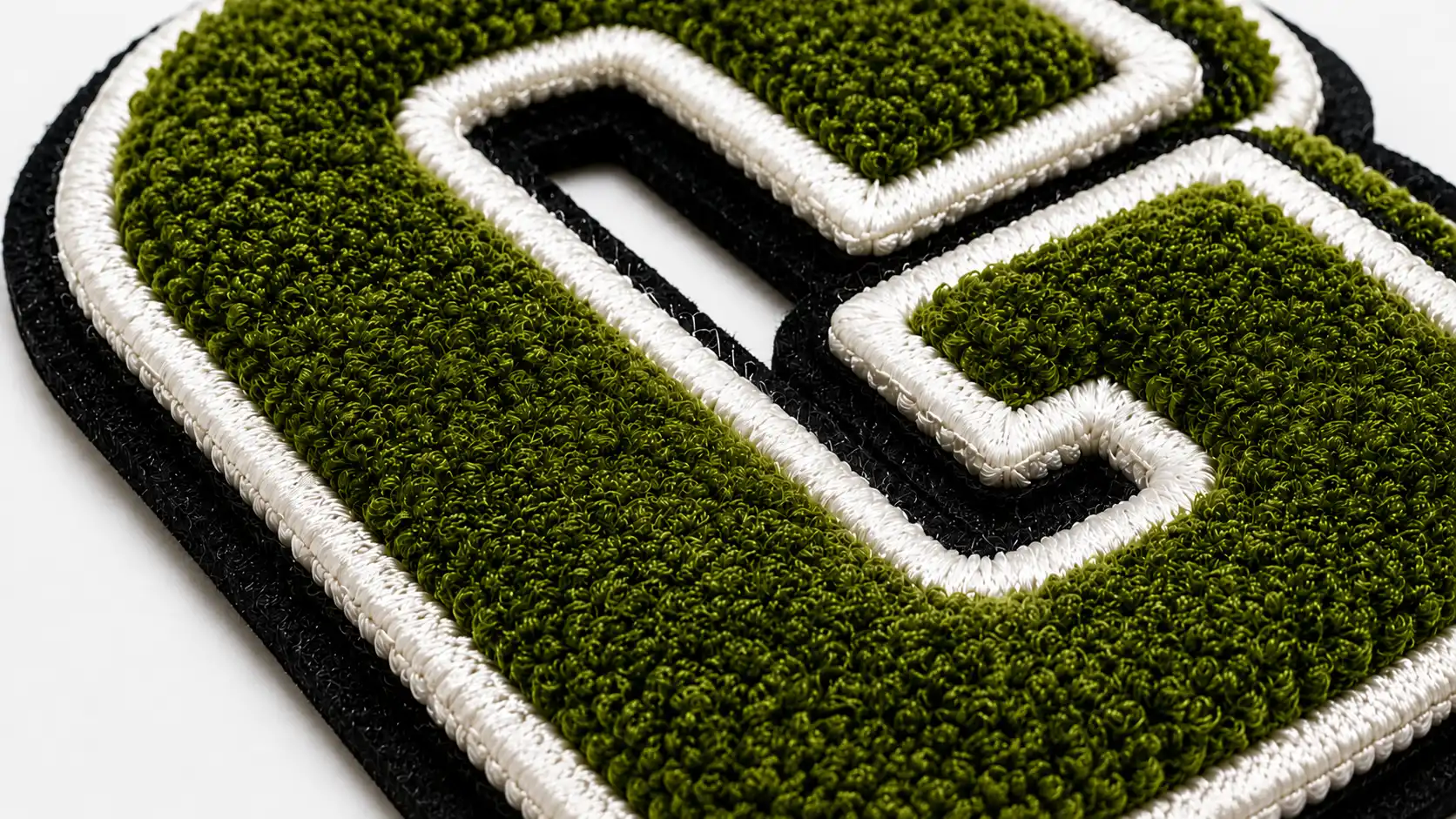
Chenille patches are associated with varsity jackets, school apparel, club patches, fashion drops, and oversized statement designs. They use a soft looped yarn texture that gives the patch a plush surface. Chenille is excellent when the design is bold, simple, and meant to be seen from a distance.
Chenille is not ideal for tiny text or highly detailed artwork. It performs best with large letters, numbers, mascot shapes, simple icons, and layered embroidery accents. If a brand wants a tactile patch for hoodies, jackets, team apparel, or retail merchandise, chenille can make the item feel more collectible.
Woven patches for fine detail and clean small logos
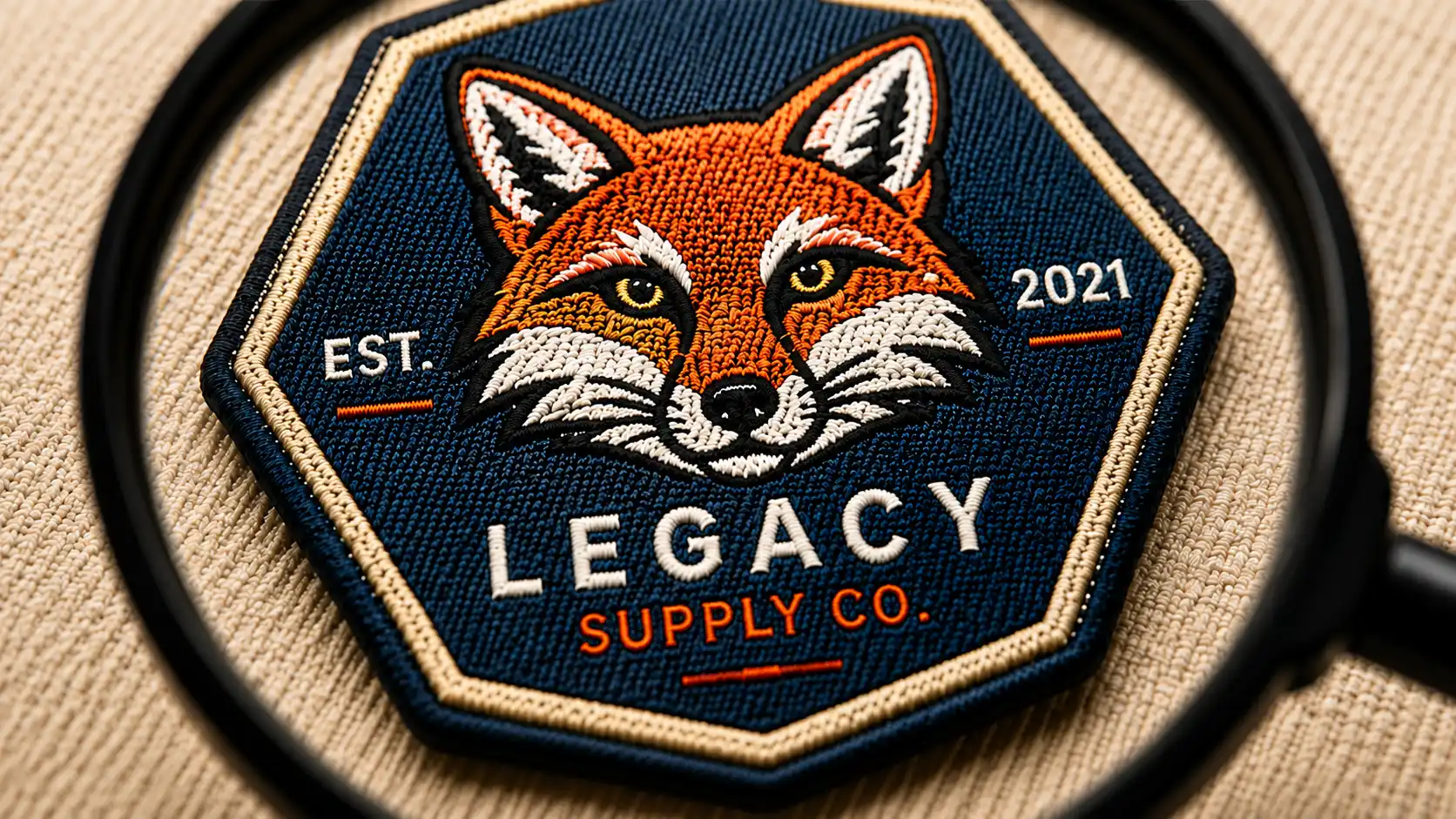
Woven patches use thinner threads and a tighter weave, which makes them suitable for fine details, smaller type, clean outlines, and flatter logo patches. They are useful for apparel labels, cap patches, sleeve marks, minimalist logos, and designs that need precision without a heavy stitched surface.
A woven patch works well for premium apparel when the design needs crisp details or small lettering. Its flatter surface also makes it more comfortable on lightweight garments than a heavily embroidered patch. For brand logos, retail accessories, and limited product launches, custom woven patches are worth considering from the early design stage.
PVC patches for outdoor gear and durable branding
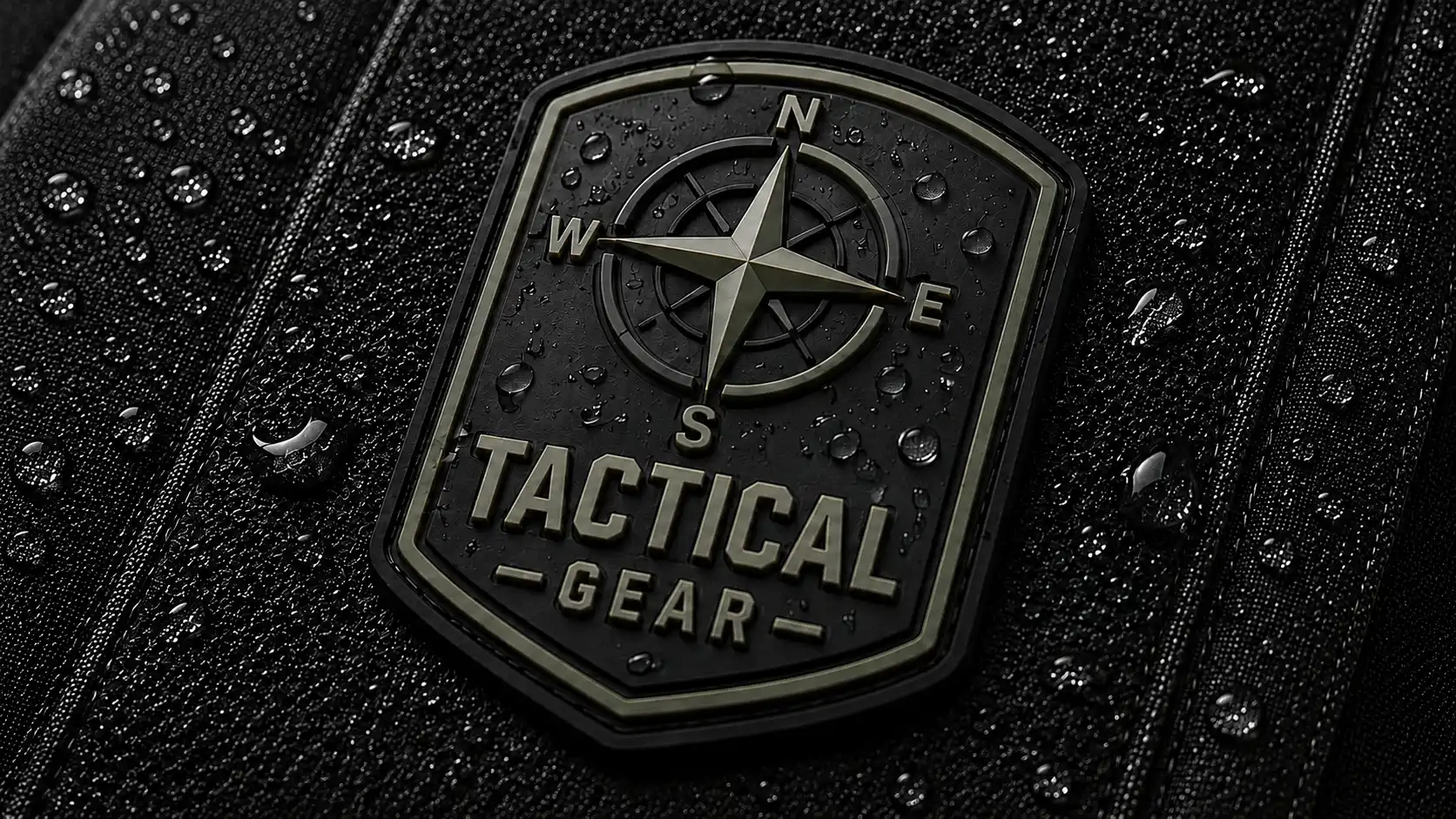
PVC patches are molded from soft rubber-like material. They are waterproof, flexible, and visually bold. They are especially useful for outdoor gear, workwear, tactical products, travel bags, sports equipment, and patches that may face rain, mud, abrasion, or frequent handling.
PVC has different design rules from thread-based patches. Fine lines may need to be widened. Small gaps need enough spacing for molding. Layering and color separation affect the final look. Mold complexity can influence price, so a manufacturer should review whether the design is better suited for 2D, 3D, or layered PVC.
What a manufacturer should review before quoting
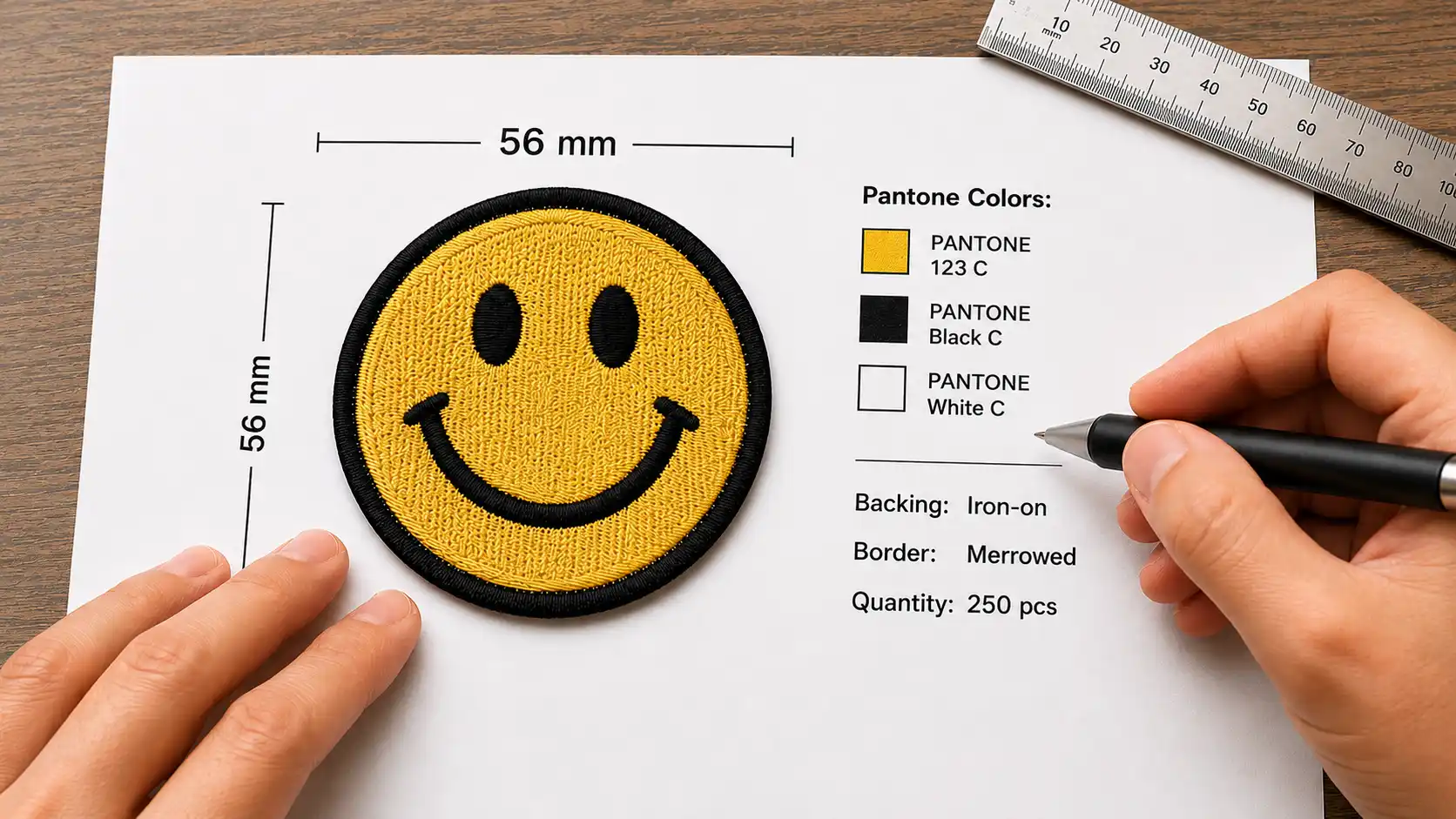
A serious China custom patch manufacturer should not quote only from a file name and a quantity. The factory needs enough information to understand the final product. At minimum, prepare the artwork, desired size, patch type, backing method, quantity, target use, deadline, and packaging requirements.
Artwork format matters. Vector files such as AI, EPS, or PDF usually make production review easier. High-resolution PNG or JPG files can also work for many projects, but complex logos may need redrawing or cleanup. If the artwork is rough, ask whether the supplier offers design assistance or digital mockups before sample production.
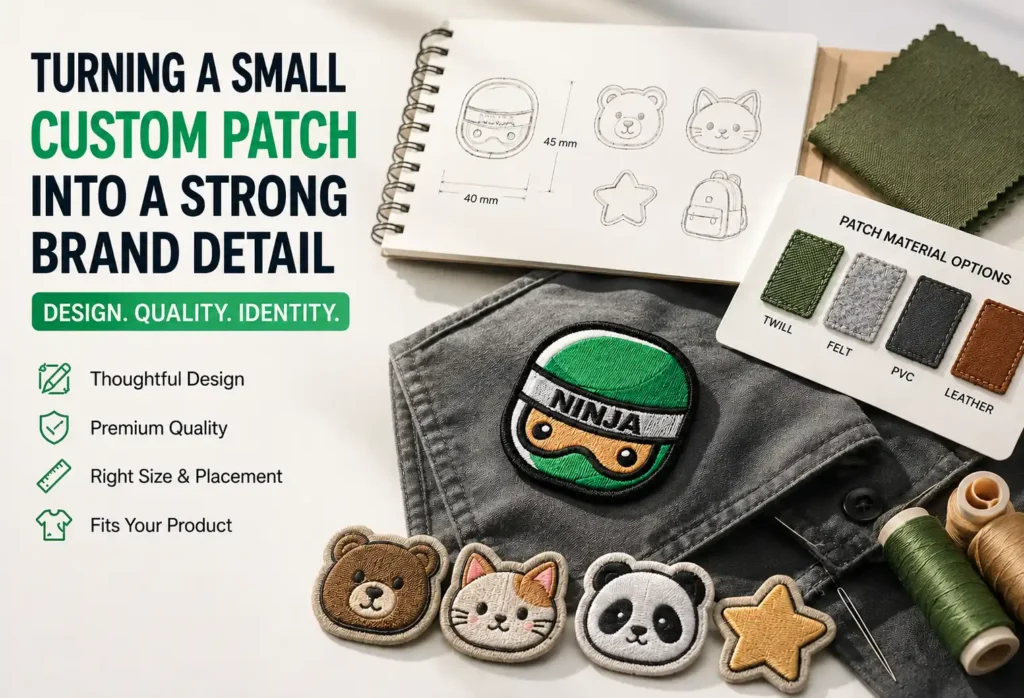
Size is another common source of mistakes. A logo that looks clear on a phone screen may become unreadable when reduced to a 2.5-inch cap patch. Before confirming production, use the custom patch size guide to compare common placements such as hat fronts, sleeves, chest badges, name tapes, bag patches, and jacket backs. The size should fit both the design and the garment area.
Backing must also match the final application. Sew-on backing is durable and widely used for garments that need long-term attachment. Iron-on backing is convenient for simple application, but it depends on fabric type, heat settings, and washing conditions. Velcro backing is ideal for removable morale patches, uniforms, tactical gear, and interchangeable bag patches. Adhesive backing is useful for temporary use, packaging, events, or display, but it is not the same as a permanent garment solution.
A good supplier will help you choose the backing instead of treating it as a minor add-on. The wrong backing can make an otherwise well-made patch fail in use.
Sampling is where good orders become predictable
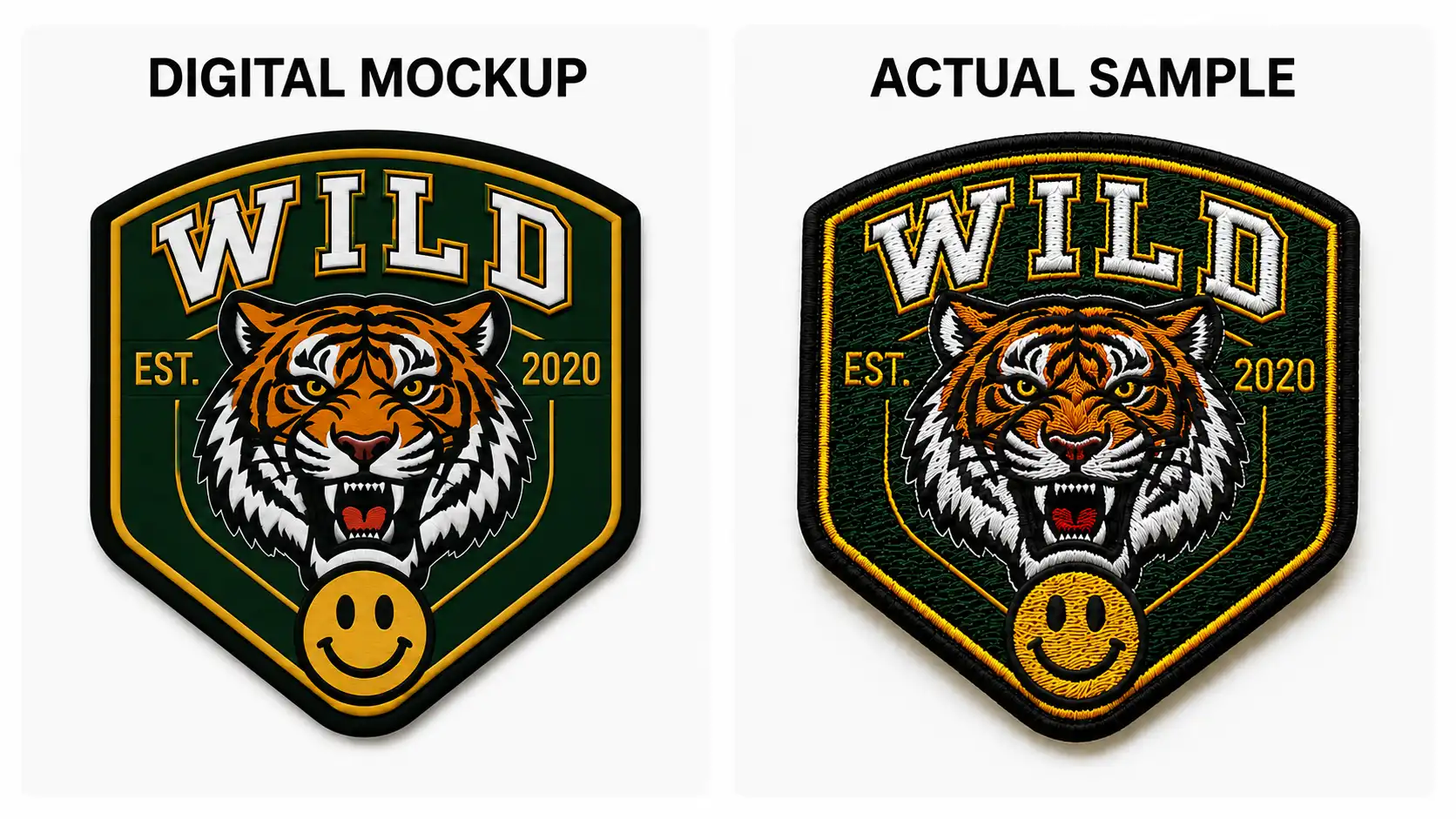
For a small personal order, a digital proof may be enough if the design is simple. For larger apparel orders, retail merchandise, factory sourcing, or a new product launch, a physical sample is often worth the time. The sample lets you check size, color, texture, border, backing, and attachment behavior before approving bulk production.
A sample is not only a miniature preview. It is a communication tool. It shows whether the factory understood the artwork, whether the thread or material choices are correct, and whether any design simplification was handled well. If the sample reveals a problem, it is better to adjust the design before hundreds or thousands of pieces are made.
When reviewing a sample, do not judge only the front view. Check the edge, back, thickness, flexibility, color under normal lighting, and how the patch looks on the actual garment or accessory. If the patch will be sewn onto caps, test the curve. If it will be heat-applied to jackets, test the fabric response. If it will be sold as merch, review packaging and presentation.
This is also where communication from a supplier such as CY Custom Patch becomes useful. If the artwork needs a thicker stitch line, a cleaner edge, or a different backing for the chosen fabric, these details should be explained during the sample review. Clear feedback at this stage helps buyers approve the right version before the order moves into bulk production.
MOQ and bulk pricing should be evaluated together
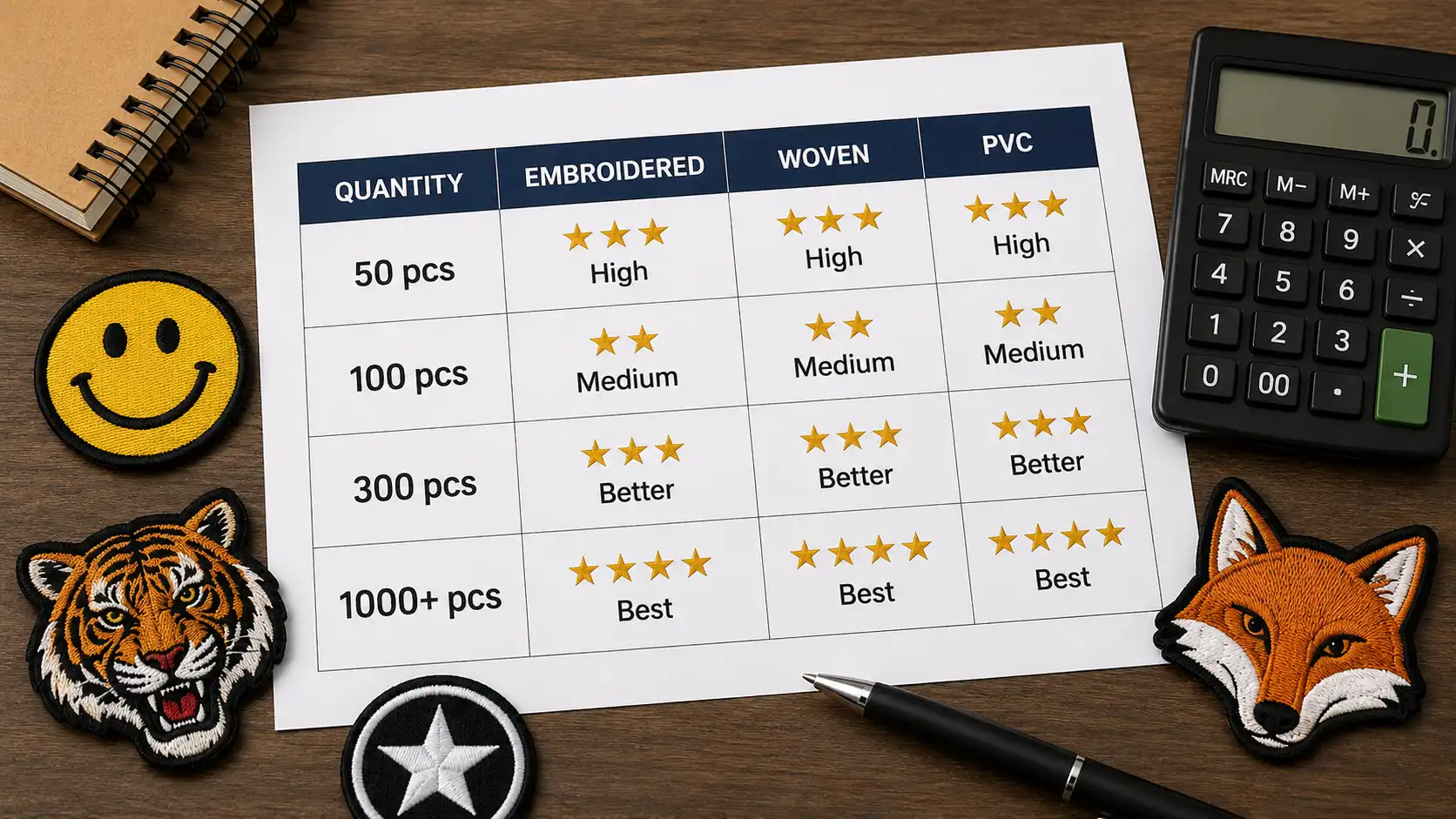
MOQ, or minimum order quantity, varies by patch type, design complexity, and production method. Embroidered and woven patches may be easier to produce in smaller batches than some molded or highly customized products. PVC patches may involve mold costs, so the price structure can change more noticeably between sample orders and bulk production.
Do not evaluate MOQ as a single number. Evaluate it alongside the total project goal. If you are testing a new logo patch for a small apparel drop, a lower quantity may help you reduce inventory risk. If you are ordering for uniforms, franchise stores, clubs, or repeated garment production, a larger batch may reduce unit cost and simplify future replenishment.
Ask the manufacturer whether reorder production can keep the same specifications. For recurring orders, the factory should retain details such as size, thread colors, backing type, border, artwork version, and packaging instructions. Consistency is especially important for garment factories and retail product lines where patches may be applied across multiple batches.
The best quote is not always the lowest first quote. It is the quote that makes the production scope clear: patch type, size, quantity, backing, border, colors, sample terms, production time, packaging, shipping method, and any cost tied to molds or special materials.
Quality control points buyers should not skip
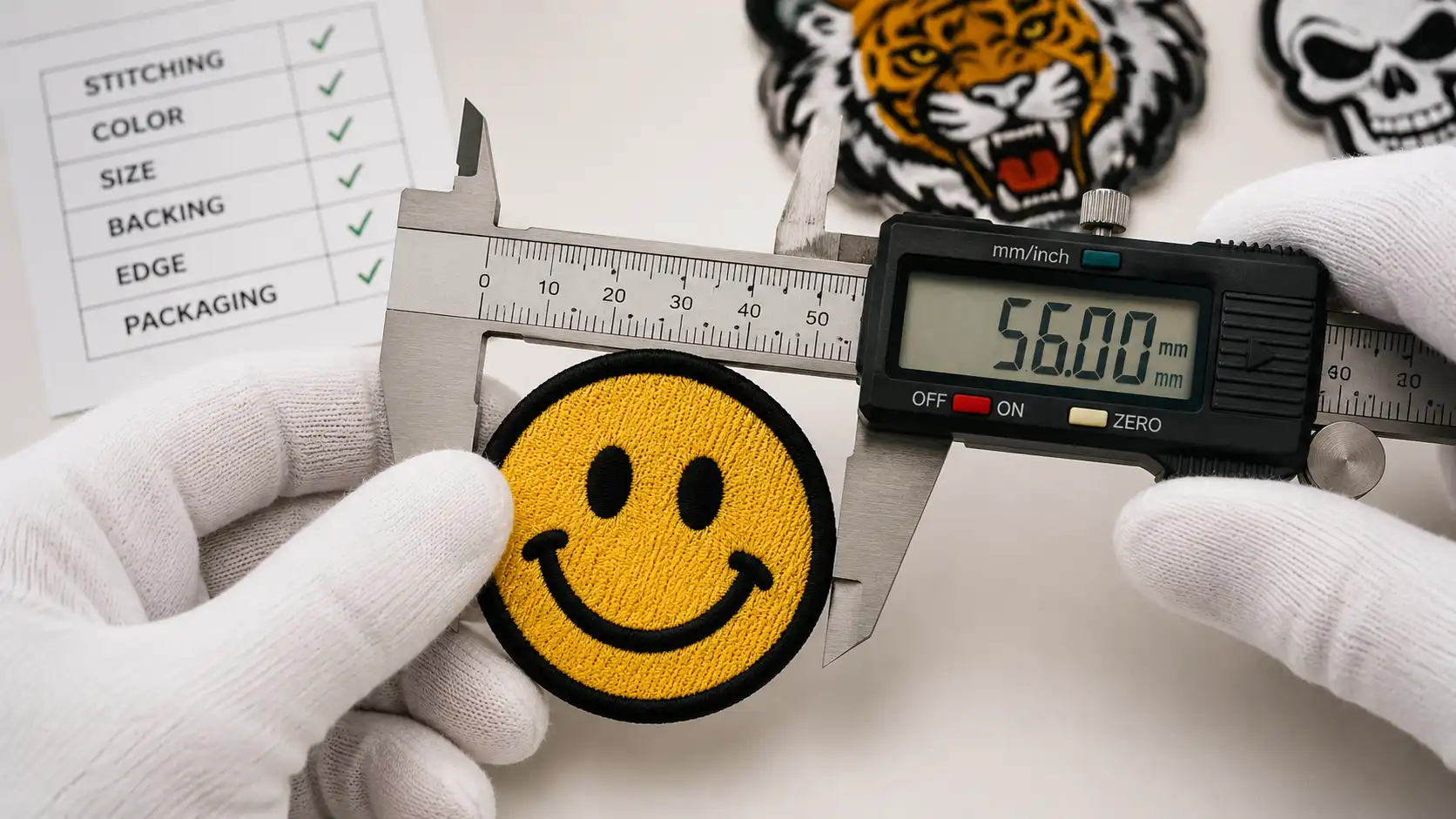
A custom patch order should be inspected against the approved sample or digital proof. Important quality points include design accuracy, color matching, stitch density, woven clarity, PVC layer alignment, border shape, cut edge, backing adhesion, size tolerance, loose threads, stains, warping, and quantity accuracy.
For embroidered patches, check whether the stitch direction supports the artwork and whether small text remains readable. For chenille patches, check yarn coverage, edge embroidery, and the cleanliness of any combined embroidery details. For woven patches, check fine lines and letter sharpness. For PVC patches, check molding depth, color fill, flexibility, surface finish, and edge trimming.
Packaging is part of quality control too. Bulk-packed patches may be fine for garment factories that will attach patches in production. Individually packed patches may be better for retail, event giveaways, influencer kits, and online resale. Backing cards can add value when patches are sold as merchandise. A manufacturer that understands packaging can help the product arrive ready for its next step.
If compliance or supplier documentation is important for your internal process, review the supplier’s quality and compliance information before ordering. These details do not replace sample approval or inspection, but they can help buyers understand the supplier’s stated quality, production, and responsibility framework.
Lead time planning for apparel and event orders
Patch orders often sit inside a larger schedule. A garment factory may need patches before sewing or final packing. A streetwear label may need patches before product photography. An event team may need patches before a festival, conference, or club launch. Late patches can delay the entire product, so timing should be planned from the final deadline backward.
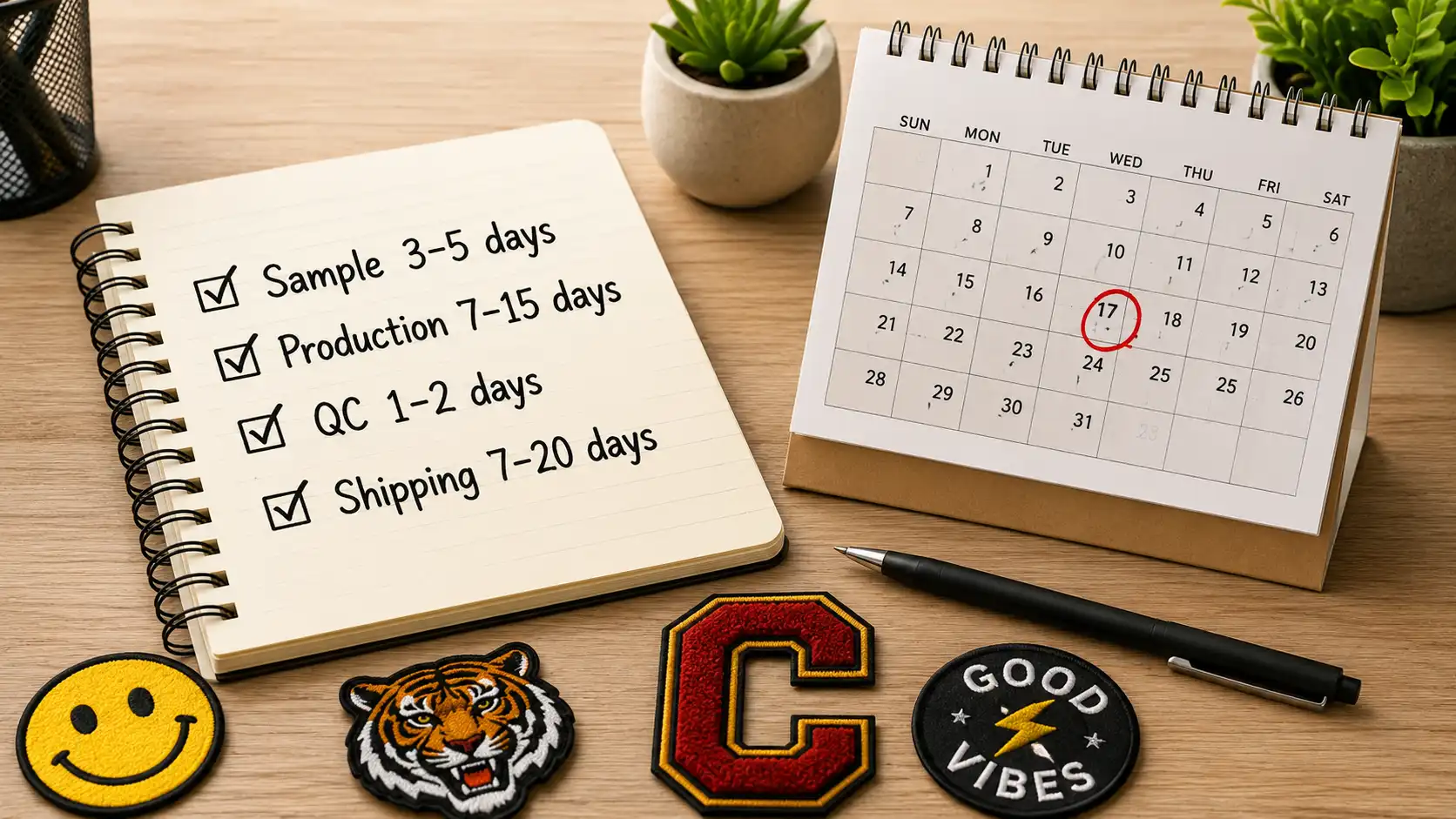
The production timeline usually includes artwork review, digital proof, sample production if needed, sample approval, bulk manufacturing, inspection, packaging, and shipping. Each step can be simple or complicated depending on the order. A design with tiny details may need more artwork revision. A PVC patch may need mold confirmation. A retail-ready patch may need custom packaging. A rush order may need express shipping and faster approval from the buyer.
When speaking with a China custom patch manufacturer, share the real deadline and the delivery location. Ask for a timeline that separates sample time, bulk production time, and shipping time. This makes it easier to see where delays can happen and whether a rush option is realistic.
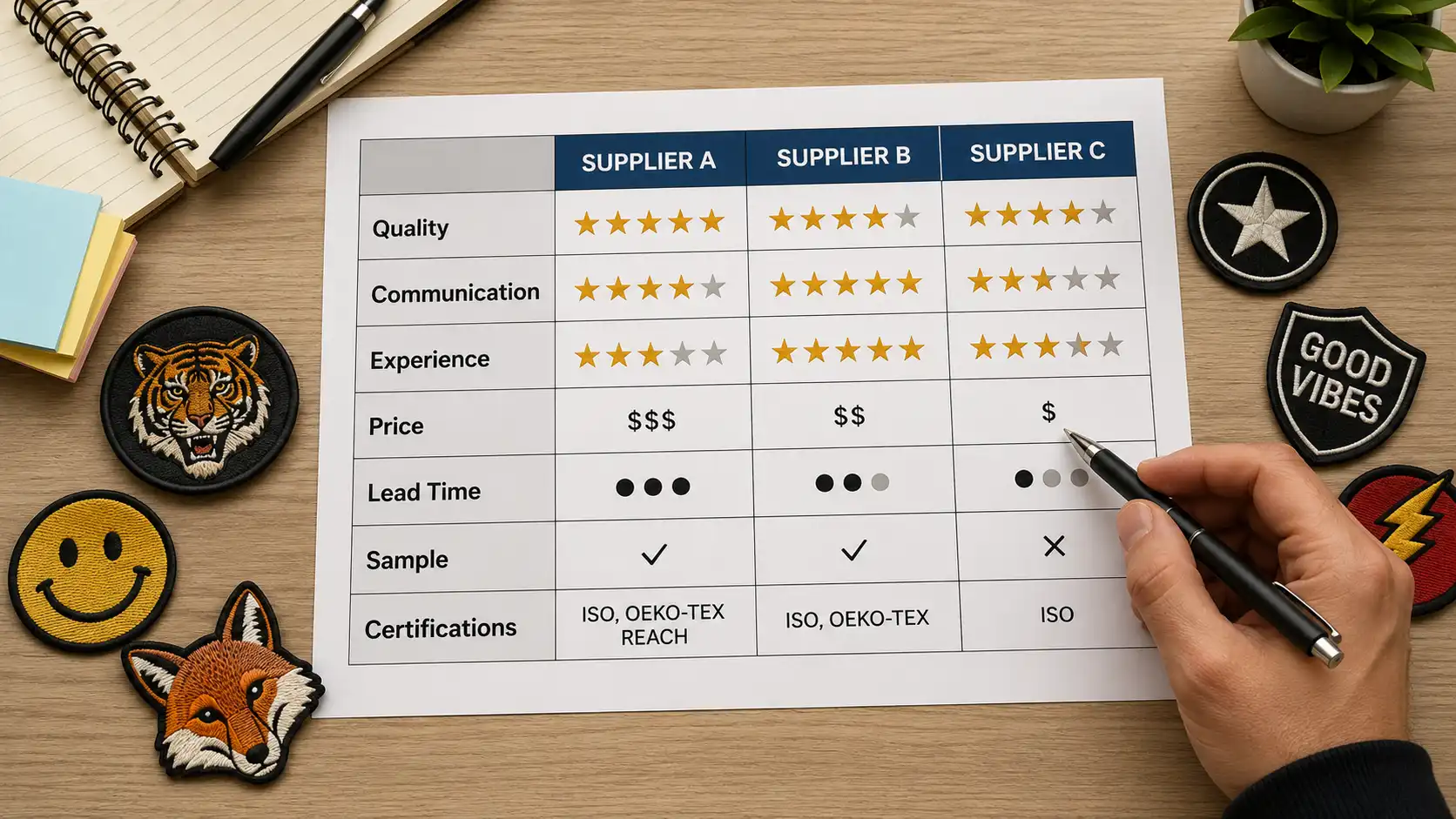
How to Compare Chinese Patch Suppliers Fairly
When comparing Chinese patch suppliers, use the same order details for every quote. Send each factory the same artwork, size, quantity, patch type, backing option, deadline, and packaging requirements. This makes the comparison more accurate. If one supplier quotes an embroidered patch and another quotes a woven patch, the prices are not based on the same production method, so the comparison can easily become misleading.
The way a supplier responds is just as important as the price. A reliable custom patch manufacturer should ask practical questions about the artwork, garment type, placement, backing, and final use. They should also explain possible production limits, such as small lettering, thin outlines, color separation, mold detail, or fabric compatibility. Clear sample options, production timelines, and shipping details also help buyers understand what is included before placing a bulk custom patch order.
A good factory relationship should make repeat orders easier. Once the first order is approved, the supplier should be able to keep the same artwork version, thread colors, size, border, backing, and packaging details for future production. This consistency is especially important for apparel brands, garment factories, uniform buyers, event merchandise, and retail product lines. In the long run, a supplier that can keep quality stable is often more valuable than a slightly lower price on a poorly defined first order.
Working with a Supplier That Understands Patch Applications
For buyers who need custom patches for apparel, uniforms, hats, bags, events, clubs, promotional products, or branded merchandise, it helps to work with a supplier that can review the design from a real-use perspective. ChengYi Custom Patch fits naturally into this type of sourcing process because the website covers multiple patch categories, including embroidered patches, chenille patches, woven patches, PVC patches, printed patches, sequin patches, and 3D embroidered patches. This range is useful when one project needs different patch styles, or when the buyer is still deciding which material is best for the design.
A China custom patch manufacturer can be a strong sourcing partner when the factory understands both production details and the final use of the patch. The best supplier does more than make the patch itself. It helps buyers choose the right patch type, adjust artwork where needed, plan sampling, control quality, and deliver custom patch