
Embroidered Paper Dolls for Mix-and-Match Dress-Up Play
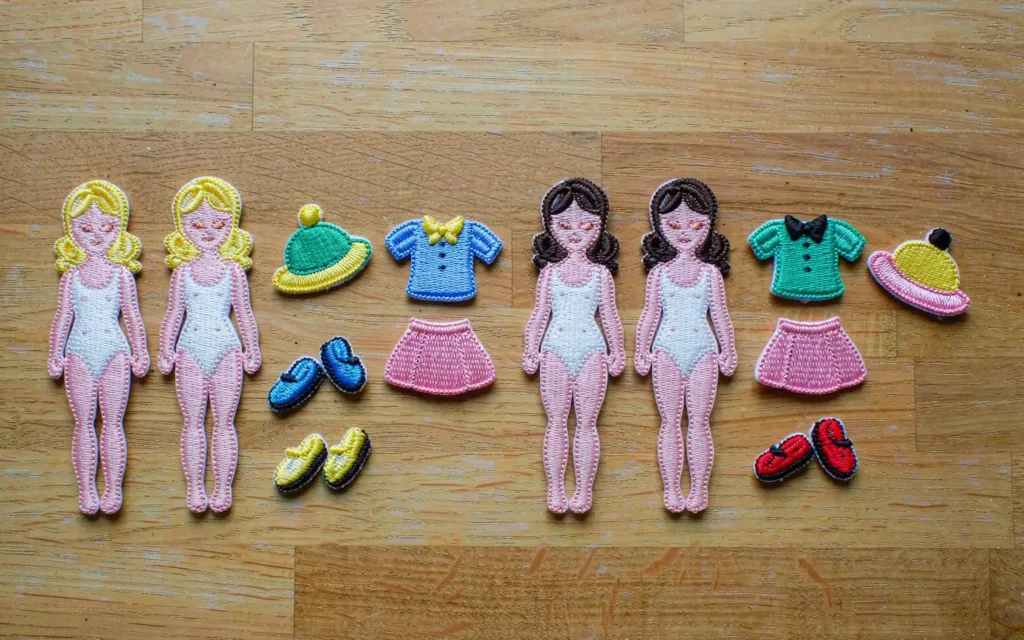
Embroidered paper dolls bring classic paper doll dress-up play into a flat, stitched format. Each set features an embroidered character with separate embroidered clothes and accessories that can be swapped to create different looks. Unlike a paper cutout or a stuffed doll, the character and wardrobe are made as flat textile pieces.
One character might wear a school uniform, change into a winter coat, or become a fairy with embroidered wings. The appeal is in the change: each outfit fits the same figure, so a small set of pieces creates several distinct looks. For brands, gift collections, museums, and character merchandise, that also opens the door to new outfits without redesigning the base doll.
Making the idea work is more demanding than stitching a group of attractive patches. The body proportions, garment outlines, attachment areas, backing, and thickness all need to be planned as one set.
What Are Embroidered Paper Dolls
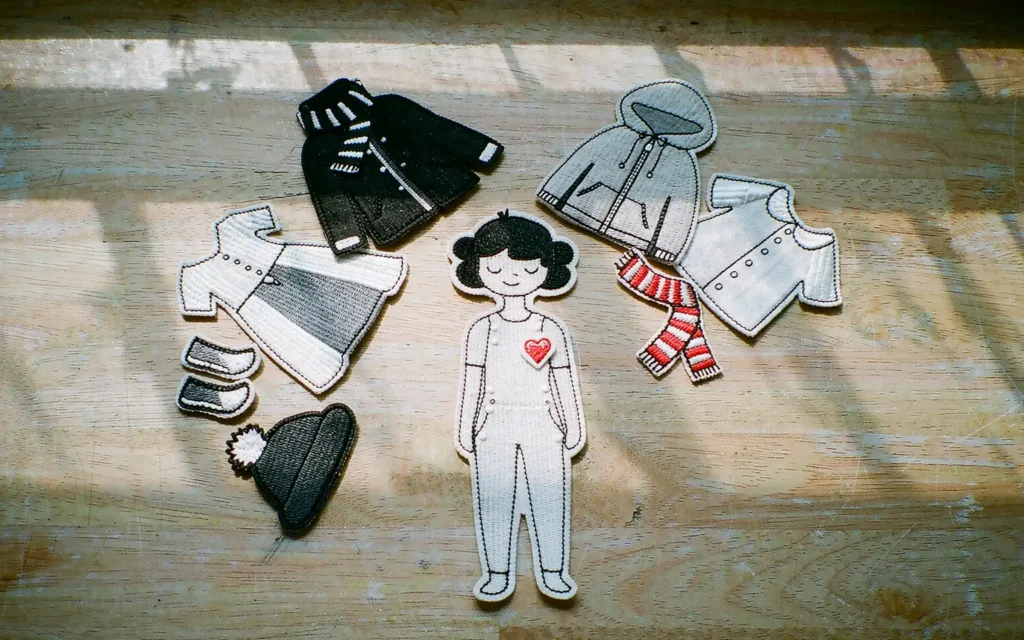
An embroidered paper doll is a flat embroidered figure intended to be dressed with removable, separately embroidered garments. The term “paper doll” describes the familiar mix-and-match play concept, not the material. These sets are not made from paper, and they are not three-dimensional plush dolls.
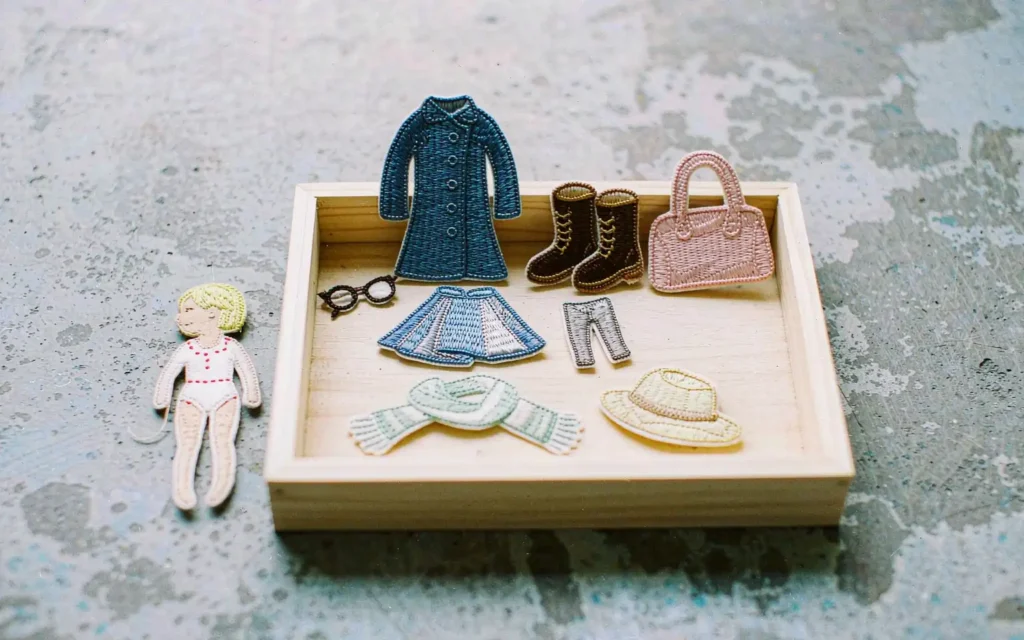
A typical set includes a base character, a few complete outfits, and accessories such as shoes, hats, bags, or wings. Not every accessory needs to be a separate piece: very small details may work better stitched directly onto a garment. The important feature is that the removable parts fit the same character and can be changed without damaging the embroidery.
- A recognizable base figure that looks finished even between outfit changes
- Garments that line up at the shoulders, waist, head, or feet
- Flat pieces with enough support to resist curling
- A tested attachment method and a practical way to store the wardrobe
Why Brands and Collectors Choose Embroidered Dress-Up Dolls
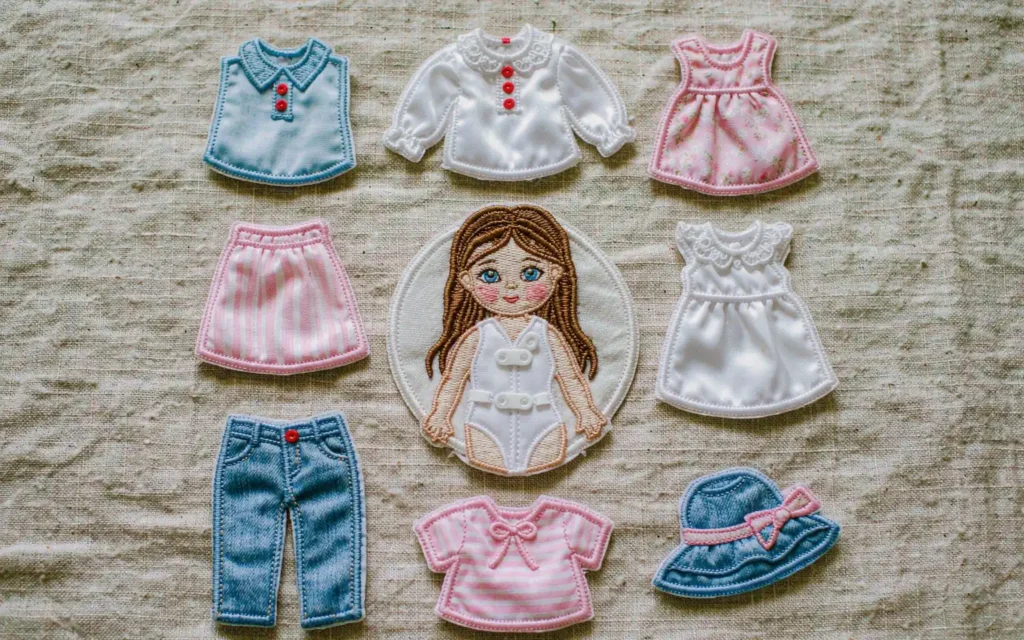
A single embroidered character can take on different roles while keeping its familiar face and silhouette. That makes the format useful for personalized gifts, school mascots, fashion-inspired collections, educational themes, and small character ranges. The tactile stitching gives these flat pieces a different feel from printable dress-up sheets.
Personal details can be built into the character from the beginning: a hairstyle, skin tone, team colors, a name, or a recognizable uniform. For commercial collections, however, too many custom options can complicate sampling and packing. It is often easier to approve one base figure and offer a controlled range of outfits and character variations.
For a repeat collection, the first wardrobe matters more than the number of pieces. A doll with four well-matched looks is easier to understand and use than a large assortment whose garments do not fit consistently.
Design the Base Doll Before the Outfits
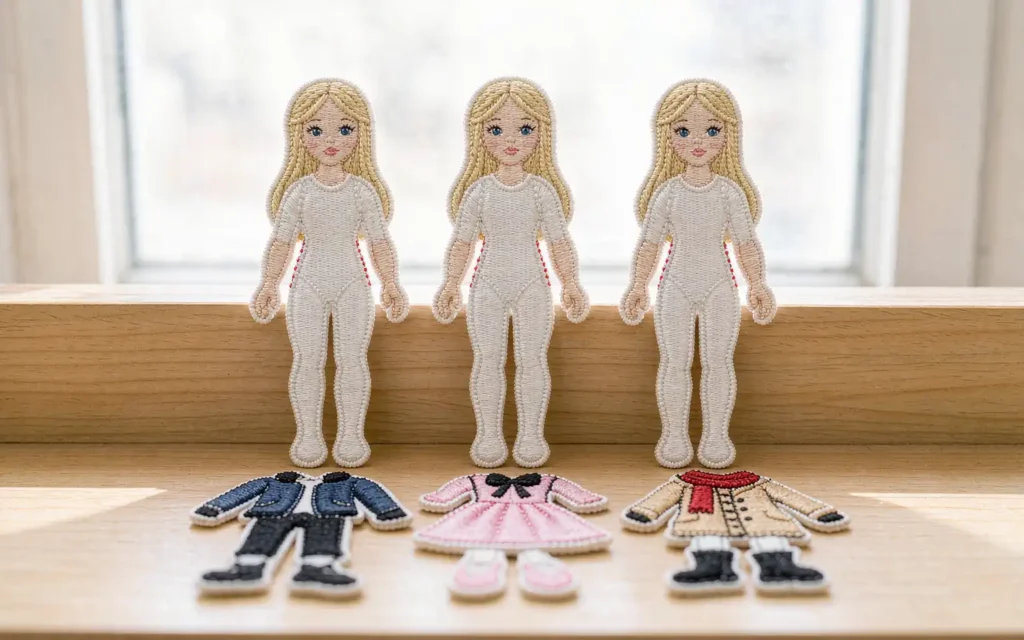
The base figure sets the proportions for every clothing piece that follows. Approving the character first prevents one small change to the body from forcing revisions to the full wardrobe.
Choose a Pose That Makes Dressing Easy
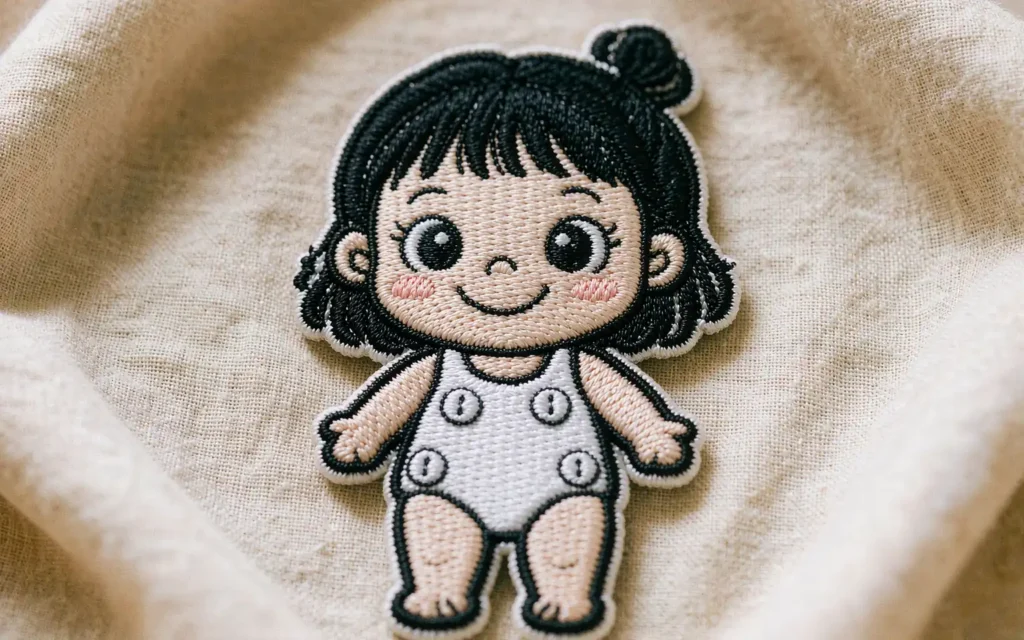
A mostly front-facing pose gives shirts and dresses a reliable center line. Arms placed slightly away from the torso leave room for sleeves; enough space between the legs helps pants, boots, and skirts sit clearly. A dramatic running or dancing pose may work as an illustration, but it usually makes interchangeable clothing harder to align.
Keep Facial Details Clear at Small Sizes
Eyes, brows, lips, and tiny highlights can merge when too many stitches meet in a narrow area. Review the face at the intended finished size, not only on an enlarged screen. Simplify fine lines, adjust thread direction where useful, and keep contrasting shapes open enough to remain readable after stitching.
Give the Character a Finished Base Outfit
A leotard, fitted top and shorts, or another simple foundation can make the figure look complete while clothes are being changed. Keep this base outfit visually quiet so the removable wardrobe remains the main feature. Check that the base design does not show awkwardly beyond necklines or hems.
Make Every Embroidered Outfit Fit the Same Doll
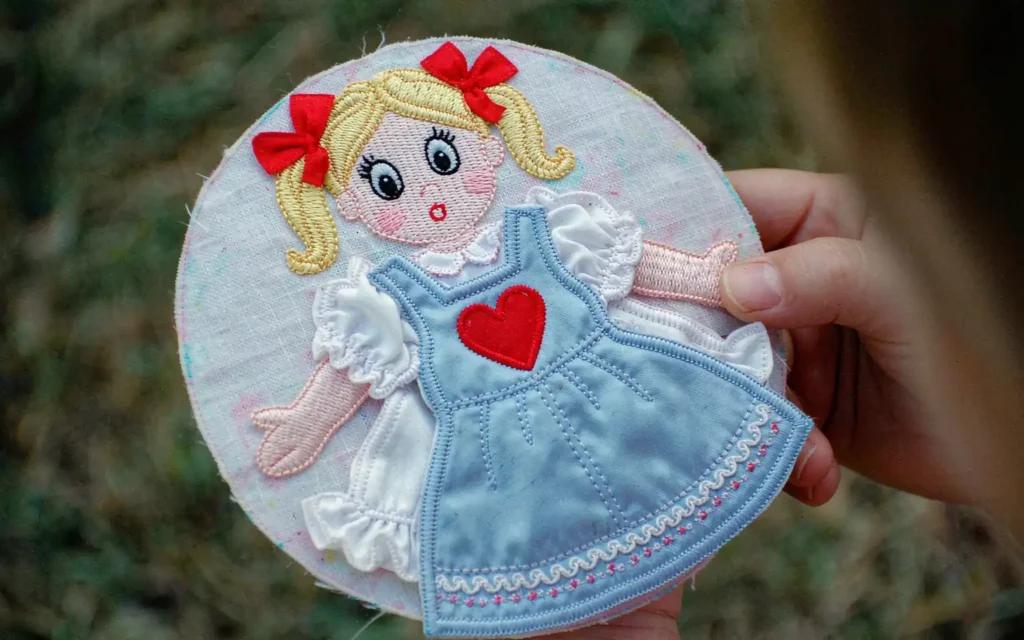
Interchangeable outfits depend on repeatable placement. Treat the shoulders, neckline, waist, head, and feet as shared reference points. Once the first well-fitting garment is approved, use it as a guide for the rest of the collection.
Start With Necklines and Shoulders
The upper edge determines whether a dress, shirt, coat, or uniform appears to fit. If shoulders extend too far beyond the figure or the neckline floats above it, the outfit can look misplaced even when the embroidery is beautiful. Build tops around one approved torso outline, then test each different silhouette on the physical doll.
Allow Room for Fasteners Without Distorting the Shape
A skirt or coat needs a stable area behind it for attachment. Fuller silhouettes can conceal that area more easily; narrow jackets and pants need closer attention at the waist and legs. Decide where an attachment will sit before finishing the garment artwork, rather than trying to fit it into whatever space remains.
Keep Small Accessories Easy to Handle
Shoes, gloves, crowns, and hats are often the most difficult pieces to position. Narrow points can bend, and tiny shapes leave little room for a secure connection. Slightly larger outlines and cleaner stitched borders usually make accessories more practical without changing the character of the design.
Check Layered Looks as a Whole
A top and jacket may each sit flat on their own but become bulky when worn together. If layered dressing is part of the concept, test the exact combinations intended for use. A belt, collar, or decorative trim can sometimes be embroidered onto one garment instead of becoming another loose layer.
Outfit Ideas for Custom Embroidered Paper Dolls
A good wardrobe has a clear reason for each look. Rather than adding unrelated clothing, choose a character and develop outfits that tell a connected story.
Everyday and Seasonal Looks
A day outfit, casual separates, a raincoat, winter layers, and a special-occasion dress can provide variety in a compact collection. Shared colors and proportions make these pieces feel like they belong to the same wardrobe.
Fantasy Characters and Fairy Outfits
Fairy gowns, capes, crowns, and wings can be drawn as flat embroidered shapes with carefully stitched outlines. Thread color, stitch direction, and decorative fill patterns can suggest movement and texture without relying on mesh, printed gradients, or loose fabric layers. Large wings may need extra attention to stiffness and edge stability.
Mascots, School Characters, and Brand Collections
A school mascot can change between sports, club, graduation, and event uniforms. A cafe character might have a barista apron, baker outfit, weekend look, and holiday uniform. Brands can also adapt recognizable clothing from their own collections into miniature embroidered outfits, provided the shapes remain practical to handle.
Career and Educational Themes
Chef, doctor, artist, gardener, athlete, and explorer outfits give children a clear role-play idea. Keep the clothing easy to recognize, with essential details stitched onto the garment rather than relying on many tiny loose objects.
Heritage and Exhibition Collections
Museums and cultural organizations may build wardrobes around an exhibition, historic clothing, or a performance tradition. For these projects, confirm the accuracy of garments, motifs, and colors with the relevant subject-matter team before approving samples.
How Flat Embroidered Dolls and Clothes Are Made
The visual appeal of this product comes from embroidery itself. Both the character and the removable wardrobe should be engineered as flat stitched pieces; choosing thread effects, backing, and edge finishes carefully keeps the set consistent.
Use Stitch Direction to Show Clothing Details
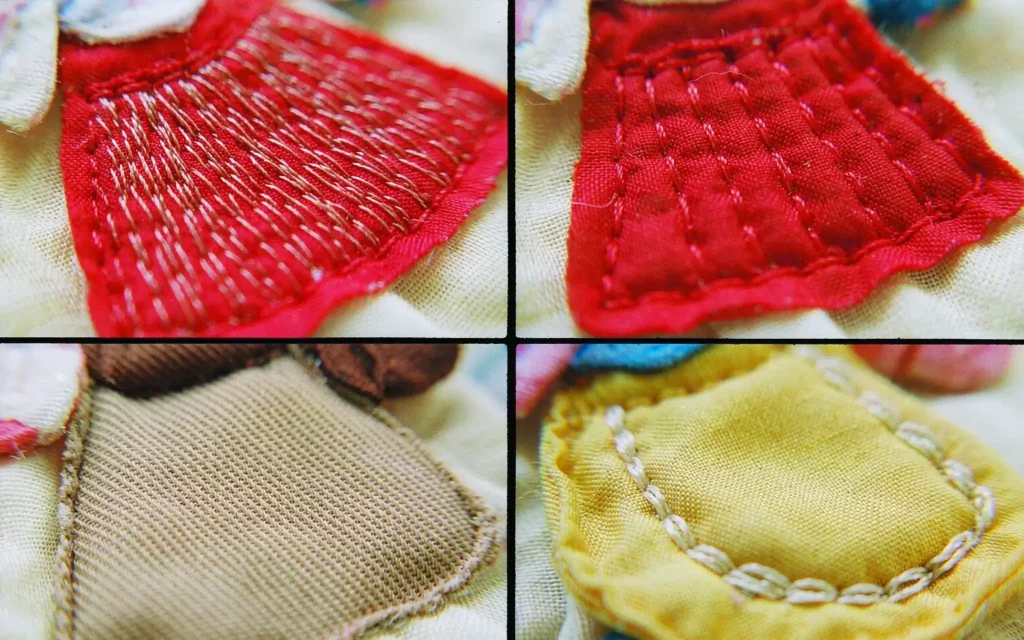
Thread direction can suggest folds in a skirt, waves in hair, jacket seams, shoe details, or a knitted surface. Dense fills work well in some areas, but covering every piece with heavy stitching can make small garments stiff. Balance textured areas with simpler sections so the outfit remains manageable.
Simplify Fine Artwork Before Stitching
Tiny lettering, thin facial lines, narrow straps, and closely spaced colors may not translate cleanly at miniature scale. Inspect the proposed details at actual size and identify areas that should be simplified, enlarged, or combined. An embroidered sample is more reliable than a digital preview for judging these limits.
Choose Backing and Thickness for Handling
The doll must be sturdy enough to hold its shape, while clothing pieces should remain flat and easy to lift. Backing and reinforcement requirements can differ between the larger body and a narrow accessory. Confirm the intended flexibility and any visible back-side finish during sampling; there is no single backing specification that suits every design.
Finish Edges to Match Each Silhouette
The border helps define the outline and protect the threads. Smooth coats and dresses are easier to finish than tiny fingers, narrow shoe straps, or deeply cut wing shapes. Where a contour would be fragile, simplify the shape before production. A good border should follow the artwork without becoming so heavy that pieces no longer sit neatly on the figure.
How Do Removable Embroidered Clothes Attach
The attachment system should be chosen while the doll and clothing shapes are still being designed. It changes the garment pattern, the thickness of the finished set, and how naturally the clothes can be changed.
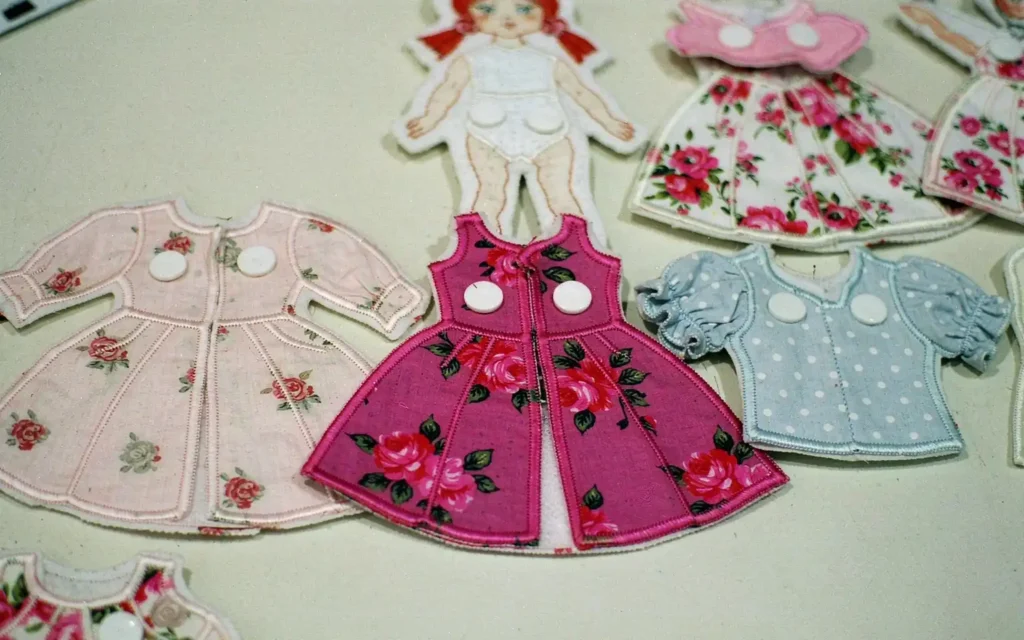
Hook-and-loop fastening is one possible approach. The placement and size of its contact areas need to be tested so the garment stays in position without catching nearby threads. Snaps offer fixed alignment, but their bulk and the force needed to open them may not suit small pieces. Repositionable fasteners can be considered for specific display uses only after repeat-use testing.
Enclosed magnets may be considered in some concepts, but magnet security, detachable small parts, intended age range, labeling, and applicable market requirements need qualified safety review. Do not assume a fastening method is suitable for children merely because it works in a prototype.
For any option, request a physical sample and repeatedly change the garments. Check whether clothes align without instructions, whether the corners lift, and whether the attachment affects the embroidery surface. A proof image cannot answer those questions.
Plan Packaging Around the Full Dress-Up Set
A wardrobe only works when its pieces are easy to find and put away. Small shoes and hats can be lost in an oversized box, while a crowded package can bend the embroidered edges.
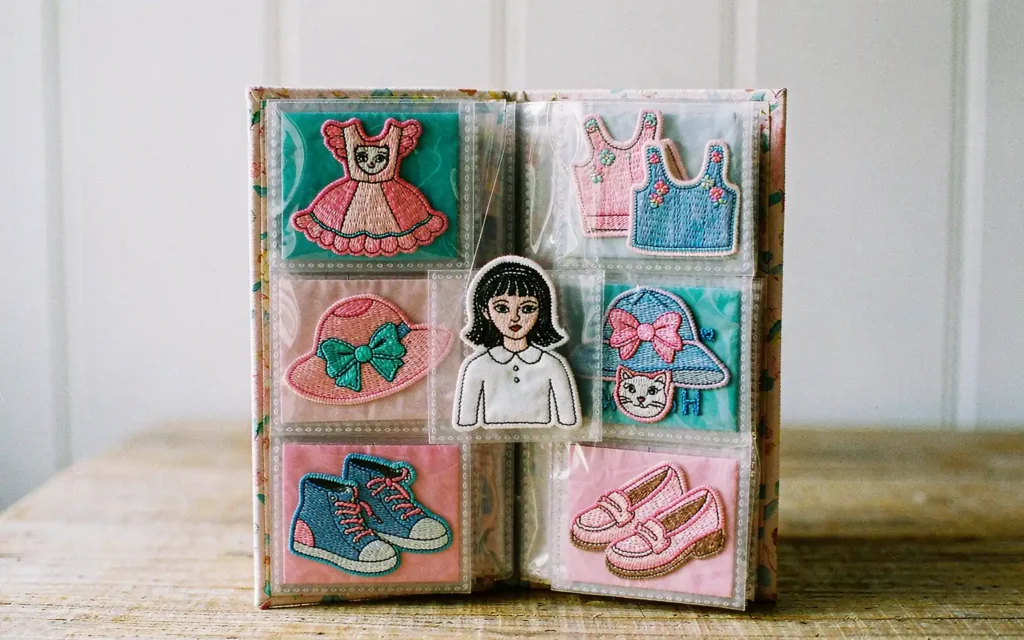
A fabric pouch, fold-out case with pockets, organized backing card, or rigid retail tray may suit different collections. Choose the format according to the number and size of pieces rather than packaging appearance alone. If future outfit packs are planned, keep their storage dimensions compatible with the first release.
The package should make three things clear at a glance: which character is included, which outfits come in the set, and how the clothes are changed. For a children’s product, packaging and labeling also need appropriate age and safety review.
How to Order Custom Embroidered Paper Dolls
You do not need a finished embroidery stitch file to start a discussion with a manufacturer. A clear character drawing and a simple wardrobe plan are more useful at the first stage than a collection of unrelated images.
For an initial quote or sample review, prepare the following:
- A front-view character illustration and desired finished height
- Separate artwork for each outfit and accessory, ideally shown both alone and on the doll
- The number of outfit looks and an estimated order quantity
- Preferred garment attachment, if already decided
- Color references, intended users, and any packaging requirements
For a first prototype, one base doll, three to five different looks, and one or two larger accessories make a manageable starting point. This is a design recommendation, not a minimum order requirement. The sample should reveal which areas need stronger edges, clearer stitch details, or more space around attachments.
ChengYi Custom Patch can review the character artwork, outfit arrangement, and embroidery construction for a custom project. Final materials, dimensions, sampling scope, quantity, and production details should be confirmed against the actual design rather than assumed from a general article.
Test the Complete Embroidered Dress-Up Set
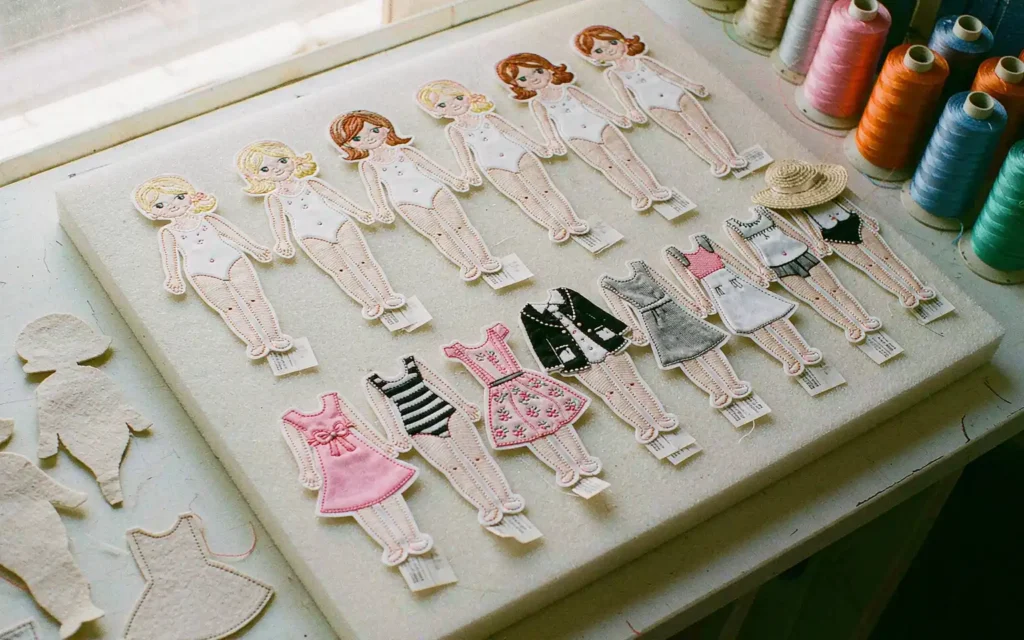
Start with the base character. Check facial clarity, symmetry, finished edges, overall stiffness, and how the foundation outfit looks without added clothes. Then place every garment on the figure and inspect the neckline, shoulders, waist, hem, and accessory positions.
Change the looks repeatedly, including any planned layered combinations. Watch for lifted corners, snagged threads, exposed fasteners, bent narrow sections, and garments that no longer lie flat. Have someone unfamiliar with the sample try dressing the doll: hesitation often reveals a usability problem that the design team has stopped noticing.
Finally, pack the pieces in their intended order. Check that nothing is crushed or hidden, the set can be reopened easily, and the included looks are clear to the buyer. Approval should cover the full set in use, not just individual embroidery pieces on a table.
Build a Collection Around One Recognizable Character
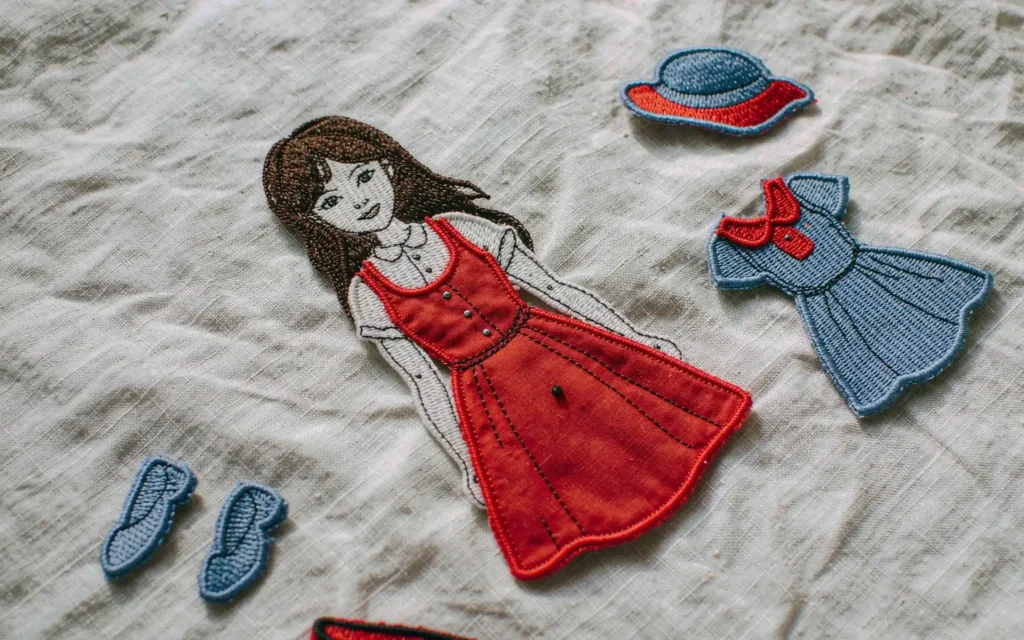
Once the fit and attachment system is approved, future outfits can reuse the same body proportions and alignment points. Seasonal uniforms, event looks, costume themes, or coordinated character variations can extend the collection without rebuilding the doll every time.
The practical starting point is a distinctive character and a small wardrobe that works reliably. From there, additional outfits are easier to develop and easier for customers to recognize as part of the same line.
If you are planning a custom embroidered paper doll set, share your character artwork, proposed outfits, finished size, quantity, and intended use with ChengYi Custom Patch. Those details provide a useful starting point for discussing a sample and the production approach.